6 minute read
For After Labor Day: The Exterior Problems Homeowners Notice Too Late
Start Where Guests Actually Walk Most homeowners start exterior checks by looking…
If you need a trusted roofing company in Berkeley Heights, New Jersey, the experienced team at Blue Nail Roofing and Siding can help. We can serve all of your roofing needs, from minor maintenance and repairs to full roof installation and replacement.

Outstanding GAF Golden Pledge Warranty

Flexible Financing

Wide Range of Top-Notch Services

Berkeley Heights sits along the Watchung ridges and includes wooded roads, established postwar neighborhoods, the town center and rail area, Free Acres, and newer residential development. Lot elevation, tree cover, driveway length, and roof height can change significantly from one property to the next.
The township includes early farmhouses, distinctive Free Acres homes, Cape Cods, ranches, split-levels, bi-levels, Colonials, custom homes, townhomes, and condominiums. The Littell-Lord Farmstead reflects the area’s agricultural past, while many modern homes have grown through additions, dormers, garages, and reconfigured upper floors.
Wooded and sloped properties require careful evaluation. Branch impact, shaded roof sections, leaf-filled valleys, long gutter runs, and downspout discharge can affect performance. Slopes, retaining walls, pools, patios, and long driveways can also shape access, delivery, and debris containment.
Berkeley Heights roofs must manage heavy rain, wind, snow, ice, summer heat, and repeated freeze-thaw cycles. Blue Nail evaluates materials, flashing, valleys, low-slope sections, ventilation, decking, gutters, and additions so homeowners receive a recommendation based on the complete roof and site.
Get Started
Common Berkeley Heights Home Styles
A quick visual guide to show homeowners what matters most based on the style and structure of their home.
Traditional roofs need crisp workmanship and clean curb appeal.
Watch for: chimney flashing, dormers, ridge ventilation, valleys, and straight shingle lines.
These homes often have living space tucked under the roofline.
Watch for: dormers, sidewalls, roof-to-wall intersections, ventilation, and heat/moisture control.
Long roof planes make drainage and edge detail easy to spot.
Watch for: attic airflow, clean roof edges, broad gutter runs, and dependable drainage.
The biggest risks usually happen where roof sections come together.
Watch for: step flashing, roof-wall connections, valleys, gutters, and downspouts that move water away fast.
Older multi-unit roofs should be treated as full systems, not isolated leak repairs.
Watch for: vent pipes, chimneys, skylights, low-slope areas, and aging roof decking.
Shared rooflines need consistency as much as they need performance.
Watch for: HOA requirements, material matching, drainage patterns, and a uniform exterior look.
Roof replacement in Berkeley Heights should begin with a complete roof and site assessment. The contractor needs to map all roof planes, additions, chimneys, skylights, low-slope areas, gutter runs, and attic zones while also planning for trees, slopes, driveways, retaining walls, and neighboring property.
Tear-off may reveal plank decking, patched plywood, multiple layers, blocked ventilation, deteriorated flashing, or additions connected under different building standards. A clear estimate should explain what is known, how decking and hidden conditions will be priced, and how decisions will be documented.
Property protection can be complex on wooded or hilly lots. Material delivery, ladder placement, debris containment, landscape protection, pools, patios, and long access routes should be resolved before work begins. Crews also need a plan for sudden weather when the roof is open.
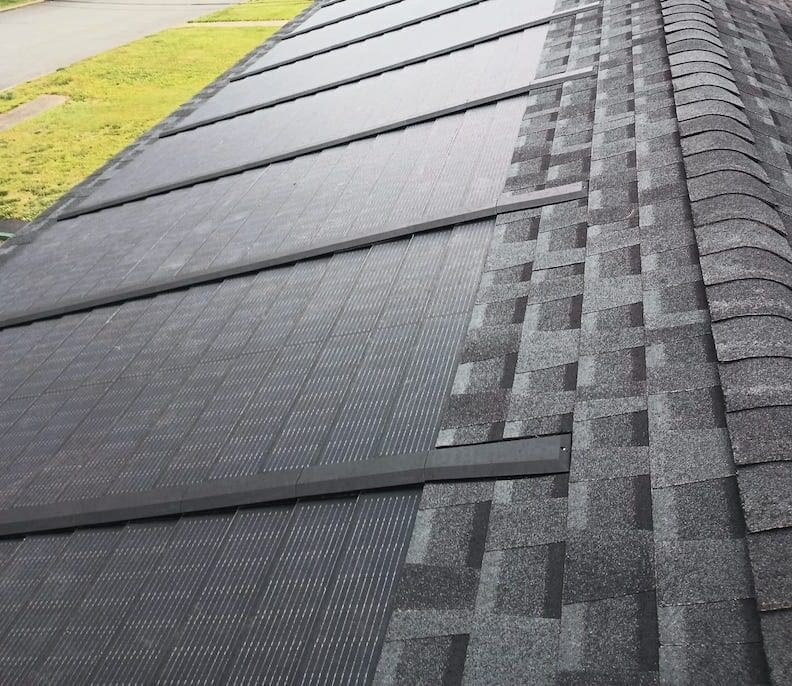
Blue Nail can help compare GAF architectural shingles, metal roofing, composite slate and shakes, natural slate, cedar, and suitable low-slope systems. The best material should fit pitch, architecture, tree exposure, maintenance expectations, structural conditions, and any community or association rules.
Explore Roof Replacement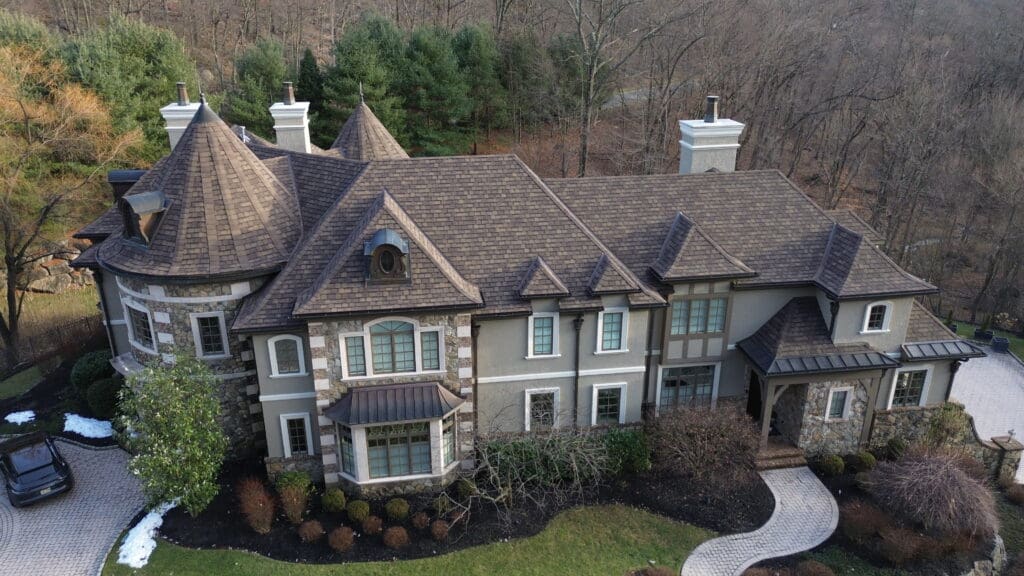
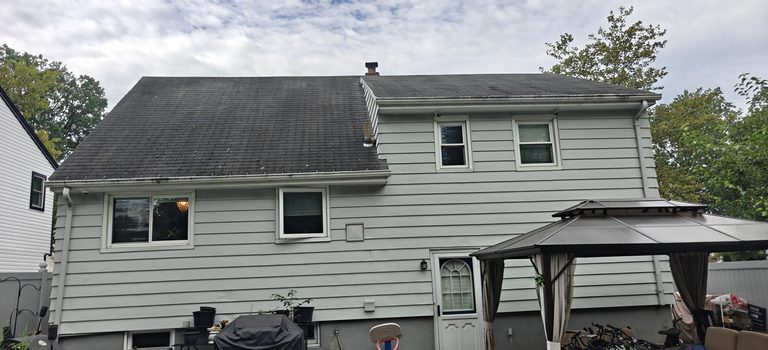
Roof repair in Berkeley Heights often involves branch impact, missing shingles, a chimney or skylight leak, water at an addition, a clogged valley, or moisture after snow and ice. The inspection should check adjacent materials and the complete drainage path, not only the most visible damage.
Tree cover can shade roof sections, fill gutters, and hide impact damage. A branch may crack shingles or specialty materials beyond the point that is visible from the ground. The evaluation should include edges, valleys, gutters, and the attic or interior below the affected area.
Split-levels and expanded homes can contain several attic spaces and roof elevations. Water may enter at an upper wall transition, move behind siding or flashing, and appear in a lower room. Ventilation and condensation should also be ruled out when symptoms occur in winter.
Repair can be practical when damage is isolated and the surrounding roof retains useful life. Replacement becomes more likely when leaks recur, materials are brittle, multiple roof sections are different ages, or decking, ventilation, and low-slope additions are failing broadly.
See Roof Repair Services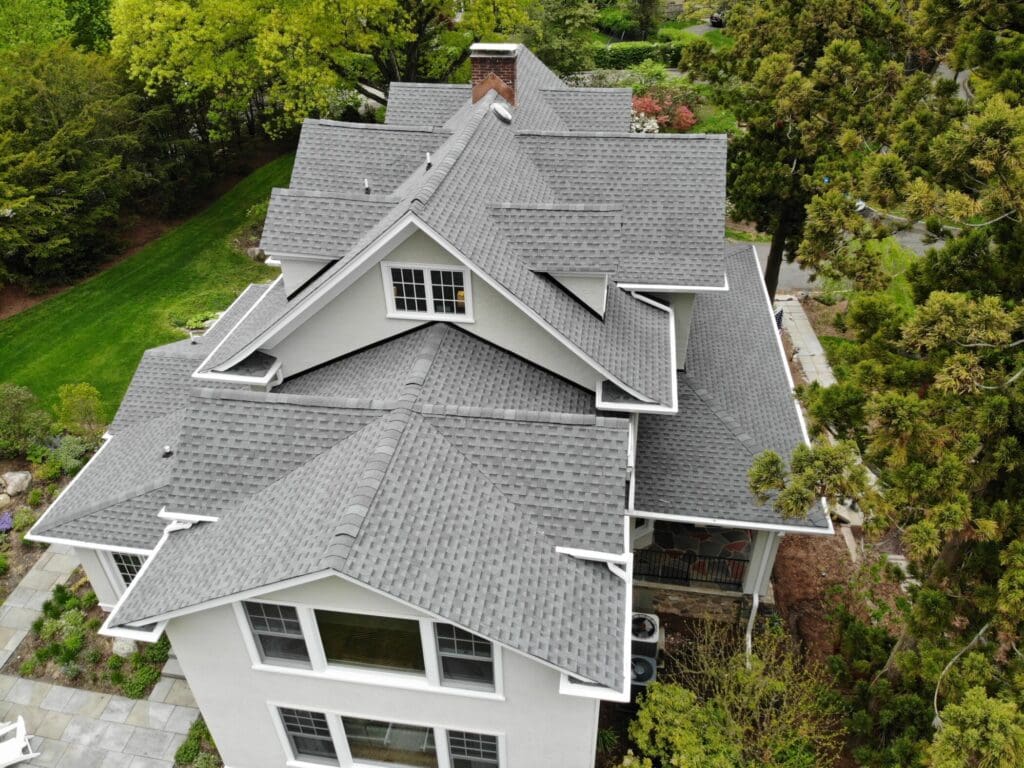
Whether your New Jersey home is your place to share meals with your family, cheer on your favorite team, or catch up with your friends, our local team is committed to making your home everything you’ve ever dreamed of.
Free Acres has its own community structure and may have architectural or association requirements in addition to municipal rules. Property owners should confirm approvals before changing visible roof materials or details.
The roofing plan should also account for wooded access, additions, drainage, material matching, and clear responsibility for applications or community review.
They can limit staging, make roof edges substantially higher from the ground, and complicate material delivery, ladders, debris removal, and emergency weather protection.
The contractor should inspect access in advance and explain equipment placement, landscape protection, daily cleanup, and how the property will remain usable.
Homeowners should monitor gutters and valleys seasonally and arrange inspection after severe wind, branch impact, or signs of moisture. The appropriate frequency depends on tree density and roof design.
Safe branch clearance and open drainage are more important than an arbitrary schedule. Never climb onto a wet, steep, or damaged roof to inspect it yourself.
Cost depends on size, pitch, height, access, material, layers, deck condition, chimneys, skylights, valleys, low-slope sections, ventilation, gutters, and site protection.
Large custom homes, steep wooded lots, and complex additions generally require more labor than simple ranch or Cape Cod rooflines.
Repair may be appropriate for isolated storm damage, a pipe boot, chimney flashing, skylight detail, or small low-slope defect when the surrounding roof remains healthy.
Replacement is more likely when leaks recur, materials are broadly worn, several old sections are failing, or the deck and ventilation system need widespread correction.
Requirements depend on the scope, decking or structural work, and related exterior changes. Association or community rules may apply in addition to township requirements.
Confirm current requirements with Berkeley Heights and any applicable association before work begins. The proposal should state who handles applications and inspections.