

Start With The Obvious Stuff
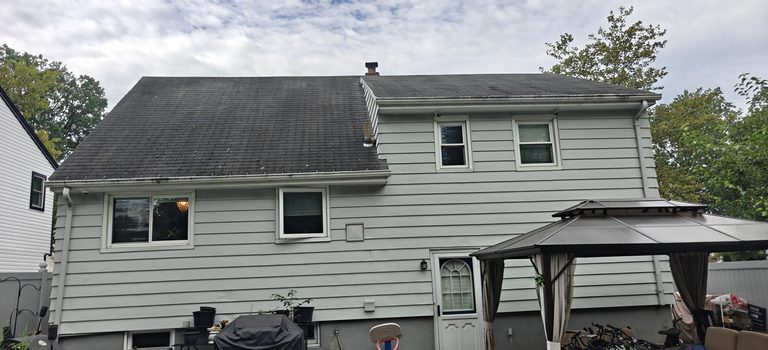
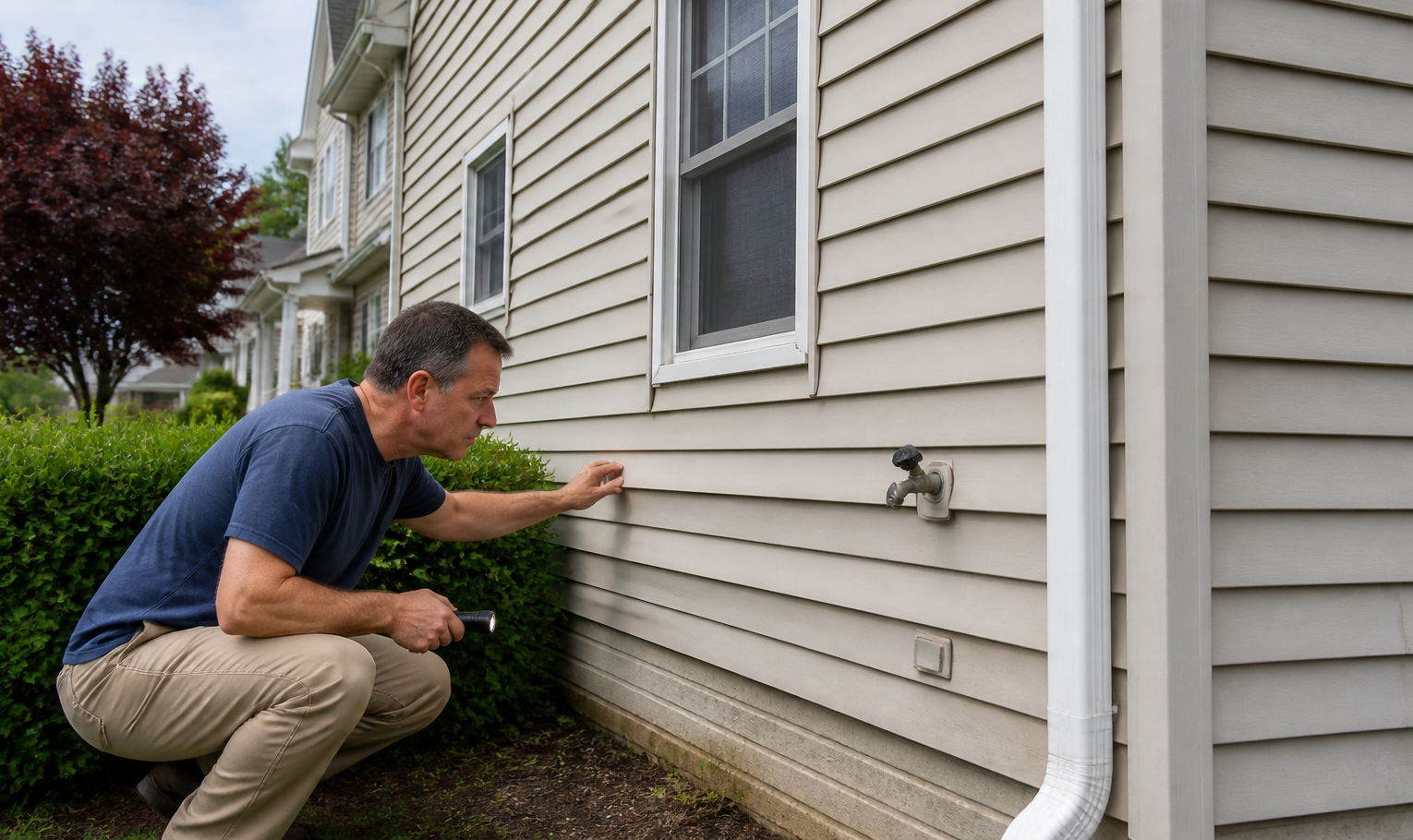
Walk the outside of the house slowly.
You are not trying to become a siding expert in ten minutes.
You are looking for changes.
Look for cracked panels, warped boards, loose pieces, gaps at seams, missing caulk, and trim that has started to pull away from the wall.
Pay close attention to the sides of the house that get the hardest sun and weather.
South and west-facing walls often show wear faster.
So do areas near decks, shrubs, hose bibs, roof returns, and places where water regularly splashes back against the home.
Small issues in those spots can become bigger problems once fall rain and winter freeze-thaw cycles show up.
Look Around Windows And Doors
Windows and doors are where a lot of siding problems reveal themselves.
That is because these openings depend on more than the siding itself.
They depend on trim, flashing, caulk lines, house wrap, and the way everything was installed together.
Look for gaps where trim meets siding.
Look for soft trim, peeling paint, swollen wood, staining, or dark streaks under window corners.
If the caulk is cracked, separated, or missing, that does not always mean water is already inside.
But it does mean the protective system is aging.
That deserves attention before weather starts testing it harder.
Check For Moisture Clues
Siding is supposed to shed water.
It is not supposed to trap it.
If you see green growth, dark staining, bubbling paint, swollen trim, or siding that feels soft when pressed, treat that as a warning sign.
Moisture does not always announce itself with a dramatic leak.
Sometimes it starts quietly.
A little staining.
A little swelling.
A little movement in the material.
That is why a quick exterior check matters.
You are looking for evidence that water is going somewhere it should not be going.
Do Not Ignore The Bottom Edges
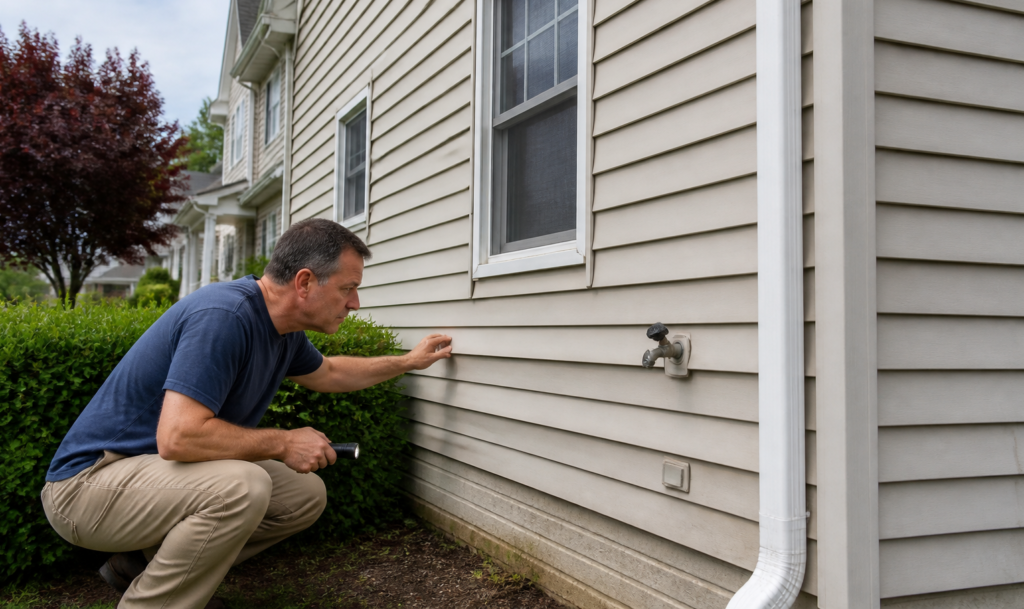
The bottom courses of siding take a beating.
They get splashback from patios, mulch beds, walkways, and driveways.
They also collect grime and moisture in areas where landscaping is too close to the house.
If mulch or soil is piled high against the siding, that is a problem.
Siding needs clearance.
Trim needs breathing room.
Water needs a path away from the home.
When the bottom edge stays damp, you can end up with rot, mold, pests, or siding deterioration that works its way up from the ground.
That is not a glamorous detail.
It is just one of the details that saves homeowners money.
Watch The Places Where Materials Meet
Most exterior problems start at transitions.
Siding to trim.
Siding to stone.
Siding to roofing.
Siding to decks.
Siding around pipes, vents, lights, and hose bibs.
Those are the spots where water has the easiest opportunity to sneak behind the surface.
Late summer is a good time to check whether those details still look tight.
If something is separated, cracked, loose, or patched over repeatedly, there may be a bigger issue behind the visible surface.
That does not always mean the siding needs to be replaced.
It does mean the home should be inspected before the damage spreads.
Why Timing Matters
Fall and winter do not create every siding problem.
They expose the weak ones.
Rain gets behind gaps.
Cold weather makes materials move.
Freeze-thaw cycles can widen small openings.
Wind-driven storms can push water into places a normal summer shower would not reach.
That is why the end of summer is such a practical time to look things over.
You still have time to make repairs before the weather turns.
You also have a clearer view of what the house looks like after months of heat and sun.
When It Is Time To Call Someone
Call a professional if you see repeated water stains, loose siding, soft trim, warped panels, visible rot, cracked flashing details, or interior signs like musty smells and wall staining.
Also call if you are not sure whether the issue is cosmetic or structural.
That is the line homeowners should not guess on.
A good exterior inspection should tell you whether the siding needs a small repair, a maintenance plan, or a bigger replacement conversation.
The goal is not to sell every homeowner new siding.
The goal is to protect the house before a small exterior issue becomes an interior repair.
Ready For An End Of Summer Siding Check?
If your siding looks worn, loose, faded, cracked, or suspicious around windows and trim, this is the right time to look closer.
Blue Nail Exteriors can inspect the condition of your siding, explain what is normal wear and what needs attention, and help you plan the right next step before fall weather settles in.
Do not wait until a cold rain makes the decision for you.
Schedule a siding inspection with Blue Nail Exteriors and get a clear answer while there is still time to act.
Quick Answers