6 minute read
For After Labor Day: The Exterior Problems Homeowners Notice Too Late
Start Where Guests Actually Walk Most homeowners start exterior checks by looking…
Blue Nail Roofing and Siding provides roof repair and replacement throughout Montgomery Township, with recommendations tailored to historic villages, rural and preserved land, established subdivisions, association-managed communities, and wooded Sourland Mountain properties.

Outstanding GAF Golden Pledge Warranty

Flexible Financing

Wide Range of Top-Notch Services

Montgomery Township covers a large area whose addresses may use Belle Mead, Skillman, Blawenburg, or Princeton postal labels. Historic villages such as Harlingen, Blawenburg, Bridgepoint, and Dutchtown sit alongside farms, open space, postwar neighborhoods, newer Colonials, custom homes, and townhome communities. The municipality and building type should be confirmed before any roofing assumptions are made.
The landscape transitions from the wooded Sourland Mountain area toward farms, stream corridors, and the Millstone River side of the township. That range creates very different access, wind, shade, and drainage conditions. Long drives, private or shared roads, mature trees, open fields, cul-de-sacs, and managed courts can each change delivery, staging, debris control, and gutter planning.
Historic farmhouses and village homes may contain plank decking, masonry chimneys, porches, and additions from several eras. Ranches, Cape Cods, and split-levels often include finished upper rooms and family-room additions. Newer Colonials and custom homes can add multiple gables, valleys, stone walls, skylights, and several attic zones, while townhomes bring shared ownership and matching requirements.
Montgomery roofs must manage heavy rain, wind, summer heat, snow, ice, freeze-thaw cycles, and tree debris. Blue Nail evaluates the roof covering together with decking, flashing, ventilation, chimneys, skylights, gutters, downspouts, and prior repairs. Site drainage and stream or groundwater conditions should be considered separately from water entering through the roof.
Get Started
Common Montgomery Home Styles
A quick visual guide to show homeowners what matters most based on the style, structure, setting, and ownership conditions of their home.
Older homes in Blawenburg, Harlingen, Bridgepoint, Dutchtown, and rural areas may combine gables, porches, rear wings, masonry chimneys, and additions.
Watch for: plank decking, multiple layers, chimney flashing, porch tie-ins, box or built-in gutters, limited attic access, and preservation of visible period details.
Homes on agricultural or formerly agricultural parcels can have long driveways, detached structures, broad exposure, and several generations of roof work.
Watch for: delivery access, open-field wind, separate roof ages, long gutter and downspout runs, outbuilding boundaries, chimney condition, and drainage across the site.
Established neighborhoods include broad ranch roofs, finished Cape Cod upper levels, offset splits, attached garages, and family-room additions.
Watch for: soffit intake, knee-wall ventilation, garage tie-ins, low-pitch additions, fascia wear, bath exhausts, long gutters, and high-to-low runoff.
Traditional and newer two-story homes may use intersecting gables, dormers, stone chimneys, attached garages, porticos, and several attic zones.
Watch for: valleys, roof-wall intersections, chimney crickets, garage transitions, upper-to-lower drainage, balanced ventilation, and material matching at additions.
Wooded properties can have tall elevations, steep drives, retaining walls, decks, complex rooflines, skylights, and limited flat staging.
Watch for: branch impact, shade, valley debris, wind exposure, high access, slope-side drainage, material handling, and protection for decks, walls, and landscaping.
Attached homes may share roof planes, walls, gutters, entrances, parking courts, and exterior standards across several units.
Watch for: association approval, ownership boundaries, color and product matching, shared drainage, resident communication, staging restrictions, and warranty responsibility.
Roof replacement in Montgomery should begin by confirming the municipality, property type, and complete roof layout. The contractor should identify every pitch, chimney, dormer, skylight, addition, low-slope section, gutter, attic zone, shared boundary, and access route. A Princeton or Belle Mead mailing label does not by itself define the local approval office or the site's roofing conditions.
Tear-off can reveal plank decking, patched plywood, several layers, abandoned openings, deteriorated fascia, or additions that were integrated imperfectly. A complete proposal should explain deck inspection and replacement pricing, underlayment, edge metal, chimney and wall flashing, ventilation, low-slope transitions, cleanup, and how concealed conditions will be documented and approved.
Project logistics should reflect the actual property. Long drives, private roads, gates, farms, septic or well areas, mature trees, steep grades, cul-de-sacs, shared courts, and association rules can affect delivery and container placement. The plan should define access, landscape protection, debris control, daily cleanup, and overnight weather protection before tear-off begins.
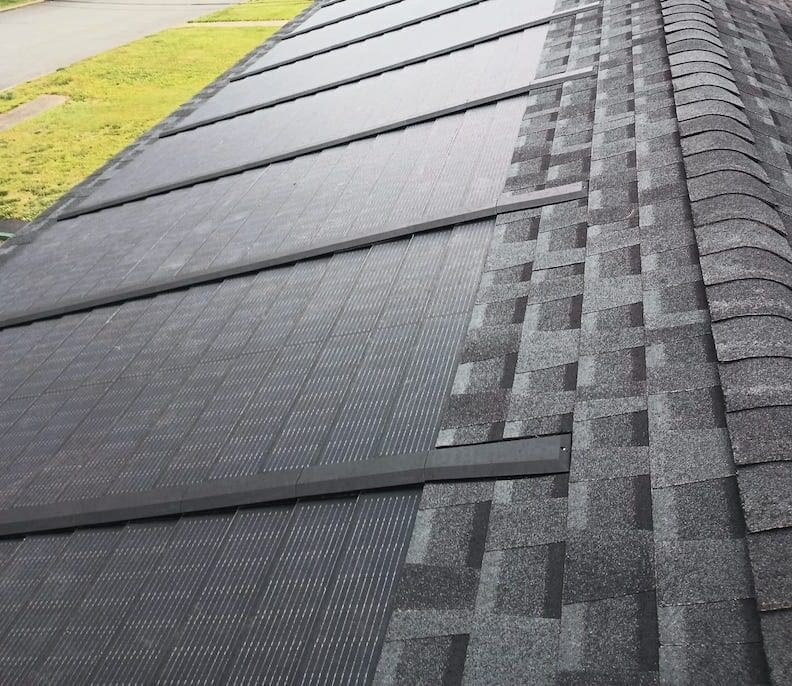
Blue Nail can help compare GAF architectural shingles, metal roofing, composite slate or shakes, natural slate, cedar, and appropriate low-slope systems. Material choice should fit the pitch, structure, architecture, maintenance expectations, wind and tree exposure, drainage, association or historic considerations, and budget. Correct flashing, ventilation, and decking remain essential on every system.
Explore Roof Replacement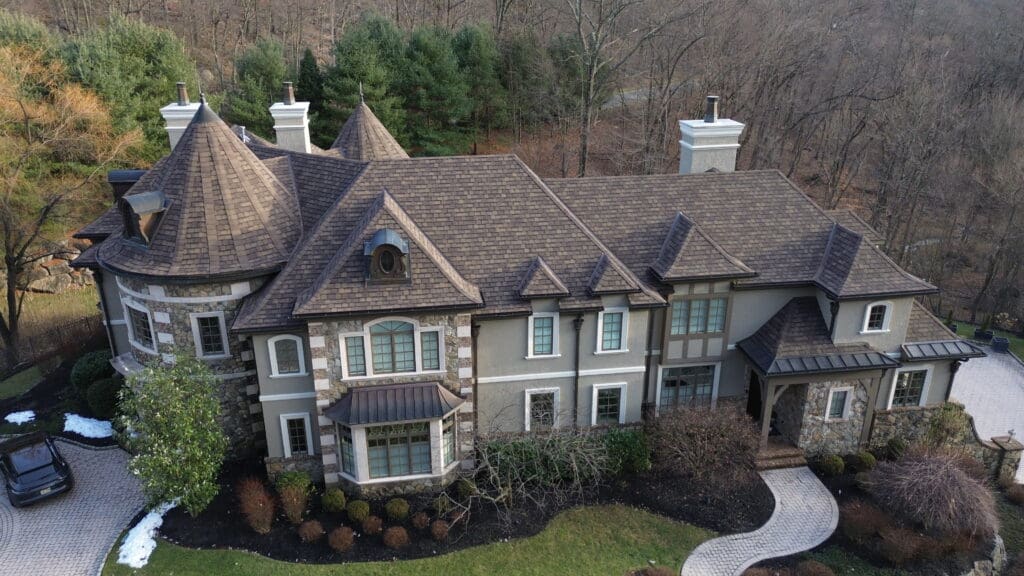
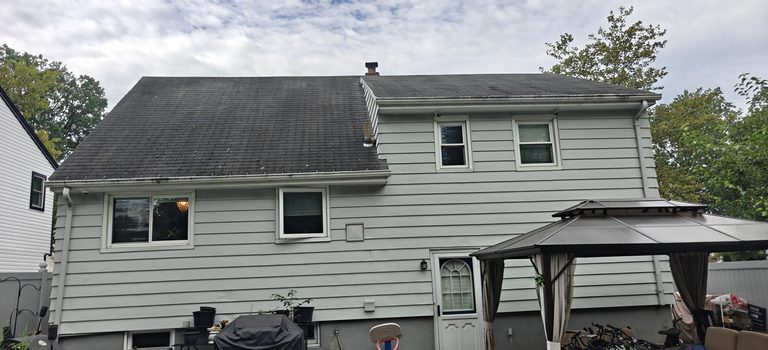
Roof repair in Montgomery often starts at a chimney, dormer, skylight, valley, pipe boot, garage connection, porch, or later addition. On older village and farmhouse properties, water may travel along plank decking or masonry. On newer custom homes, several intersecting roof planes can move water away from the point where it first entered.
Wooded Sourland-area properties may experience branch impact, shaded shingles, leaf-filled valleys, and gutter overflow. Open rural properties can face stronger wind exposure. The inspection should account for the actual site rather than assume all Montgomery homes have either mountain or farm conditions.
Low-slope sunrooms, porches, bay roofs, and additions need materials designed for their pitch. A repair should identify the failed seam, edge, drain, wall flashing, or substrate condition rather than add another layer of sealant over an incompatible or poorly drained system.
A targeted repair can be appropriate when the defect is isolated and surrounding materials remain serviceable. Replacement becomes more likely when leaks recur, shingles are brittle, decking is deteriorated, multiple layers or widespread patches exist, or several additions and attic zones have system-wide ventilation and flashing problems.
See Roof Repair Services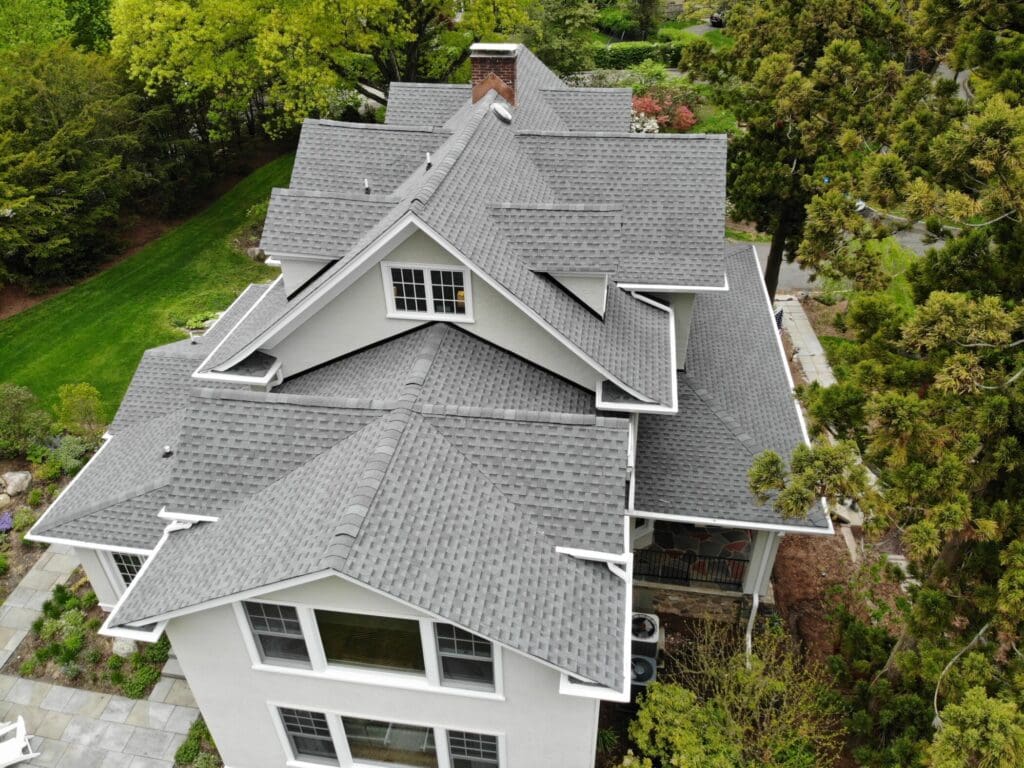
Whether your New Jersey home is your place to share meals with your family, cheer on your favorite team, or catch up with your friends, our local team is committed to making your home everything you’ve ever dreamed of.
No. Postal labels and municipal boundaries do not always match, particularly in this part of Somerset County.
Confirm the tax municipality before assigning permits, inspections, association requirements, or service details. This page is written for properties in Montgomery Township.
Rocky Hill is a separate borough surrounded by Montgomery Township, even though the communities are closely connected geographically.
Confirm the exact municipality before directing a property owner to a construction, zoning, or inspection office.
They can affect delivery vehicles, container placement, equipment access, debris removal, turnaround space, and the distance materials must be carried.
The contractor should inspect road width, grade, surface, gates, overhead clearance, and any private access rules before finalizing the staging plan.
The association or property manager may control materials, colors, work boundaries, parking, access, and work hours in addition to township requirements.
Obtain written approval and clarify matching, shared drainage, resident communication, and warranty responsibility before materials are ordered.
Pricing reflects roof size, pitch, height, access, material, layers, decking, chimneys, skylights, valleys, low-slope sections, ventilation, gutters, and property protection.
A historic village home, rural property with a long drive, attached townhome, and wooded custom home can have very different labor and staging needs.
Requirements depend on the scope. Montgomery notes that many projects requiring a building permit also need zoning approval first.
Confirm the current process for the exact property before work begins, especially for structural repairs, decking or framing changes, skylights, additions, and association-managed properties.