
 973-937-8876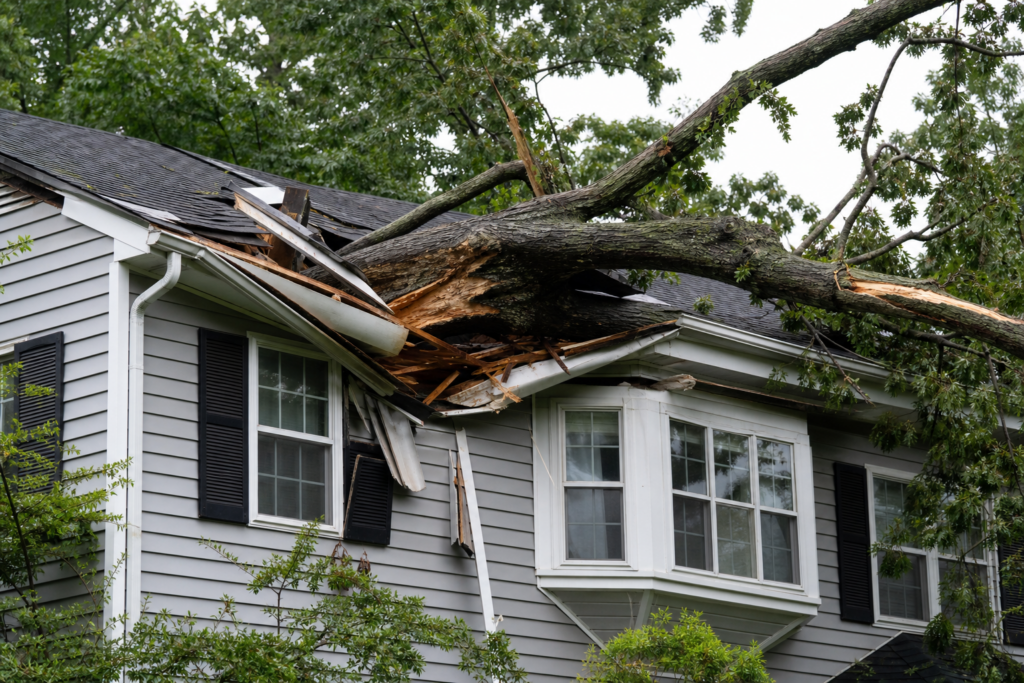
New Jersey Storms Can Turn Serious Fast
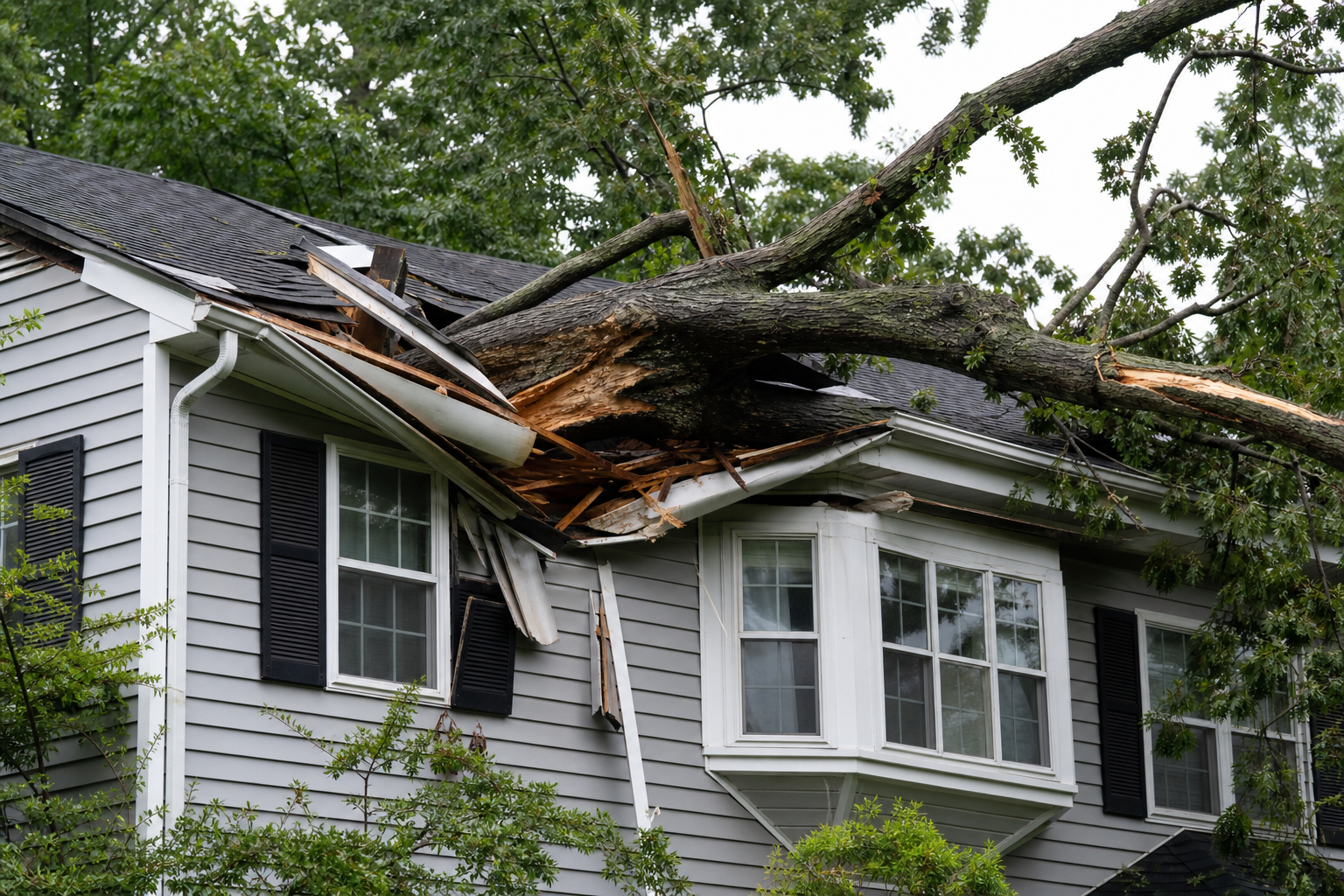
Summer thunderstorms in New Jersey can cause major roof damage in a matter of minutes. Heavy rain, strong wind, and saturated ground can bring down large branches or full trees without much warning. When that happens, homeowners are often left dealing with roof damage, leaks, and a stressful next step.
The most important thing is to stay safe and act quickly.
Why This Happens So Often in New Jersey
New Jersey sees strong summer storm systems that combine high wind with already saturated soil. That combination puts extra strain on aging trees, shallow root systems, and overextended limbs. Even healthy-looking trees can fail when the ground is loose and the wind starts pushing hard enough. That is why storm damage can happen so suddenly in neighborhoods across the state.
What To Do Right Away If a Tree Falls on Your Roof
- Do not go on the roof.
- Do not try to remove branches yourself.
- If the home looks unsafe, get everyone out immediately.
- If you notice sagging ceilings, exposed wiring, a gas smell, or active leaking near electrical fixtures, call 911 if needed.
- Your safety comes before anything else.
The First Five Steps Homeowners Should Take
- Call emergency services if power lines are involved or if there is any immediate hazard.
- Take photos from a safe distance of the roof, the tree, the interior damage, and any visible leaking.
- Contact your homeowners insurance company as soon as possible to start the claim.
- Schedule emergency tarping to help limit additional water intrusion.
- Have the roof professionally inspected so you understand the full extent of the damage.
Why Fast Action Matters
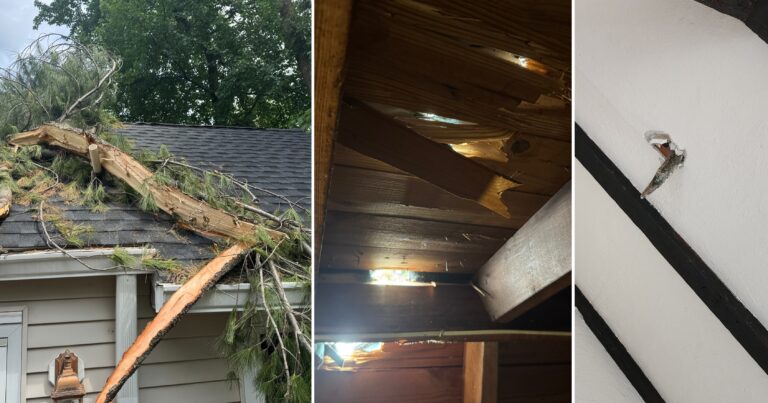
Storm damage rarely stays the same after the weather passes. A small opening can quickly turn into soaked insulation, ceiling stains, mold risk, and larger structural issues. Acting quickly helps protect the home and creates a cleaner record for the insurance process. It also gives your contractor a better chance to stabilize the roof before secondary damage spreads.
Can the Roof Be Repaired
In many cases, yes.
But the answer depends on how hard the impact was and whether the decking or framing was affected. Some homes need a focused repair. Others need broader structural restoration before the roofing system can be fully rebuilt.
A professional inspection is the only way to know which path makes the most sense.
How To Prepare Before the Next Thunderstorm
- Trim overhanging branches before storm season.
- Pay attention to leaning trees, dead limbs, and signs of rot.
- Schedule a roof inspection if your roof is older or already showing wear.
- Taking care of small roofing issues early can help reduce the chances of major storm damage later.
Need Help After a Storm?
If a tree falls on your roof, do not wait to get it checked.
A fast response can help protect your home, reduce interior damage, and keep the repair process moving.
Blue Nail Exteriors helps New Jersey homeowners with storm-related roof inspections, emergency tarping, and repair planning after severe weather.
Learn more or request help at Blue Nail Exteriors.