973-937-8876
2 minute read
After the Nor’easter: The Roof Problems Homeowners Notice Too Late
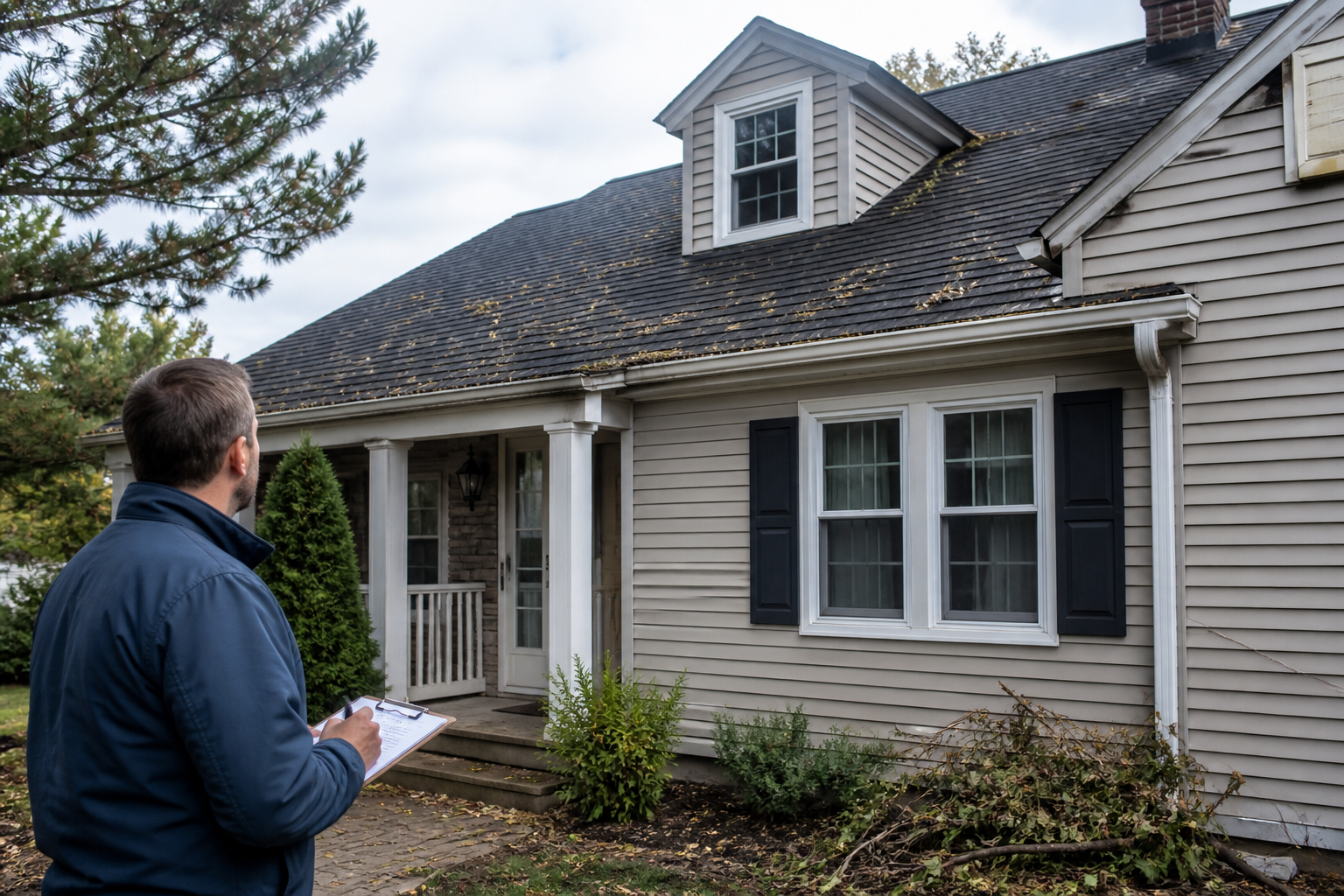
Understanding Post-Nor’easter Roof Issues Nor’easters bring intense wind and rain that can…
If you need a trusted roofing company in Clark, New Jersey, the experienced team at Blue Nail Roofing and Siding can help. We can serve all of your roofing needs, from minor maintenance and repairs to full roof installation and replacement.

Outstanding GAF Golden Pledge Warranty

Flexible Financing

Wide Range of Top-Notch Services
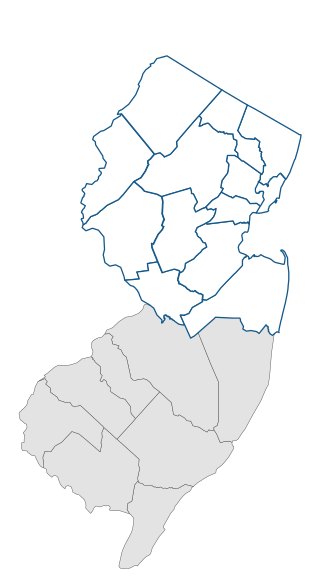
Clark is a primarily residential township with established streets around Westfield Avenue, Valley Road, Oak Ridge Road, the Rahway River Parkway, and the Robinson's Branch Reservoir area. Residents often identify parts of town by nearby schools and roads rather than formal neighborhood boundaries, so the roofing plan should stay focused on the exact property.
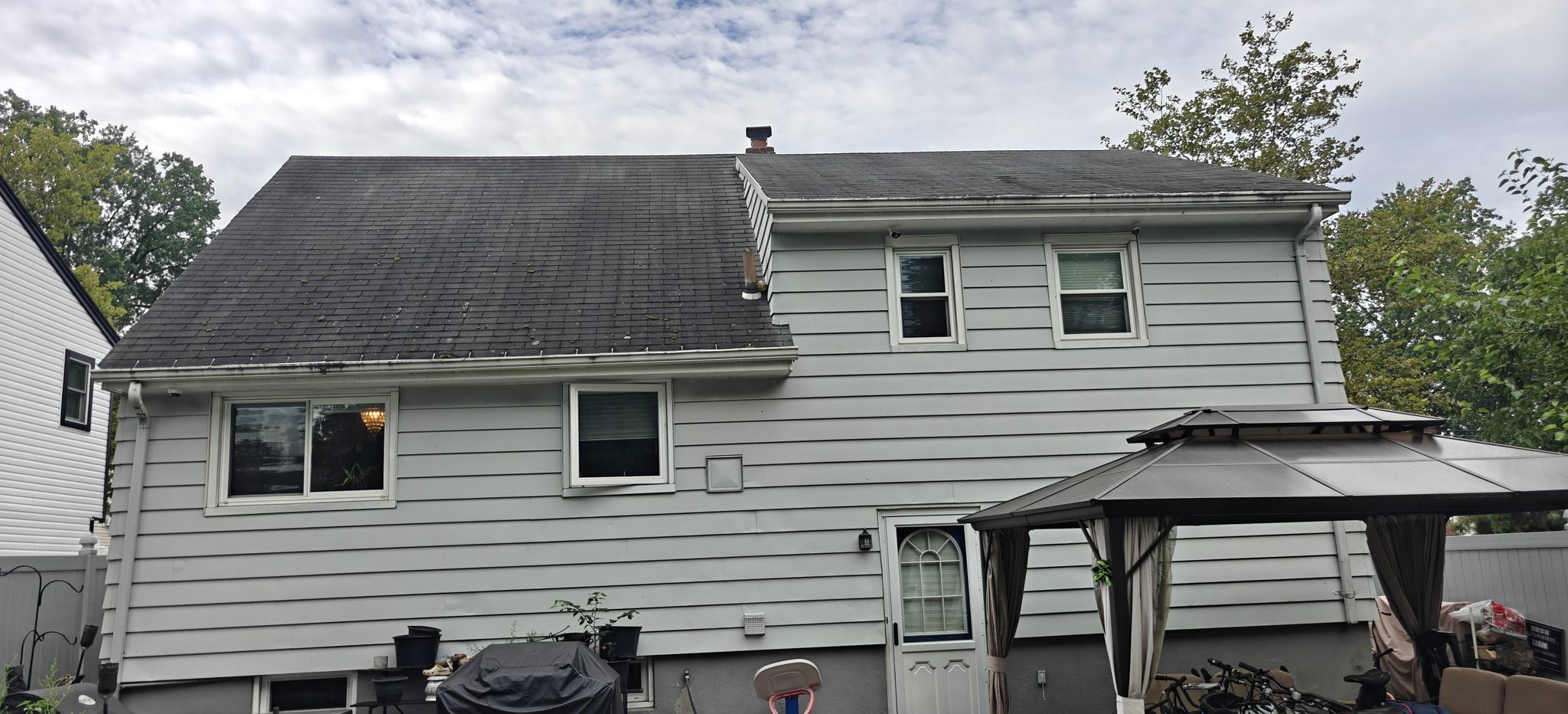
Housing includes ranches, Cape Cods, split-levels, bi-levels, Colonials, expanded postwar homes, townhomes, and condominiums. Many houses have added dormers, garages, family rooms, porches, and second floors, creating roof-wall intersections, low-slope tie-ins, and attic spaces that no longer function as one continuous zone.
Mature trees, river and reservoir corridors, and varied lot drainage can affect maintenance and project planning. Ground flooding or saturated soil is separate from roof performance, but storms can also bring wind-driven rain, branch impact, clogged gutters, and unsafe access conditions that require a complete post-weather assessment.
Clark roofs must withstand summer heat, heavy rain, wind, snow, ice, and freeze-thaw cycles. Blue Nail evaluates shingles, flashing, valleys, skylights, deck condition, ventilation, gutters, downspouts, and every connection between original construction and later additions.
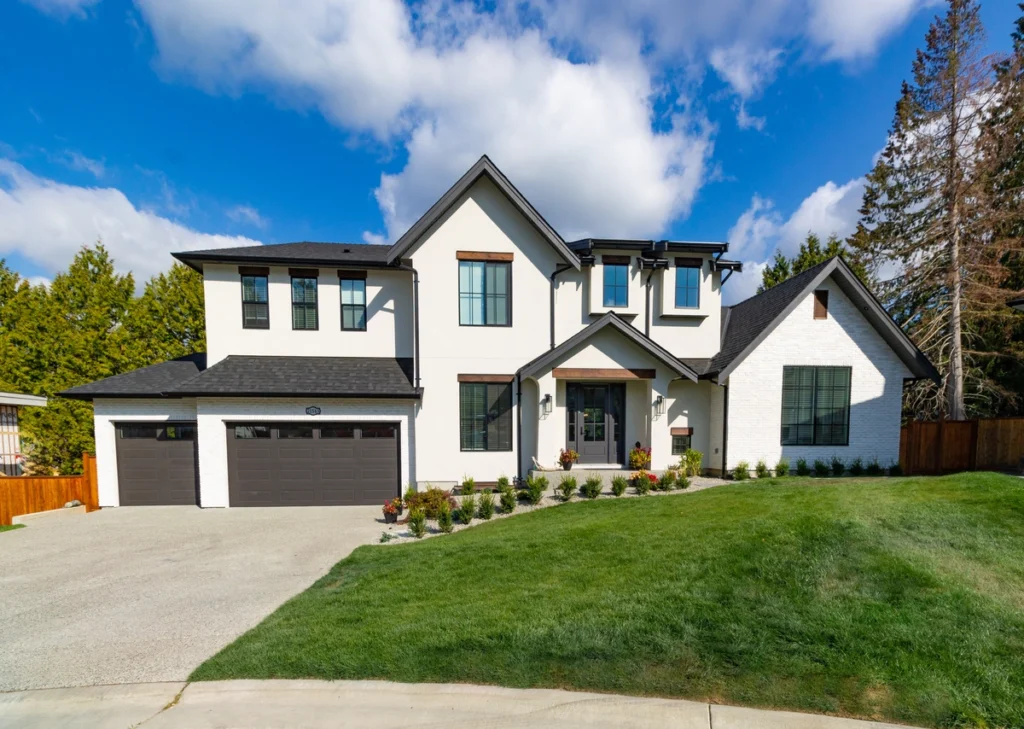
Common Clark Home Styles
A quick visual guide to show homeowners what matters most based on the style and structure of their home.
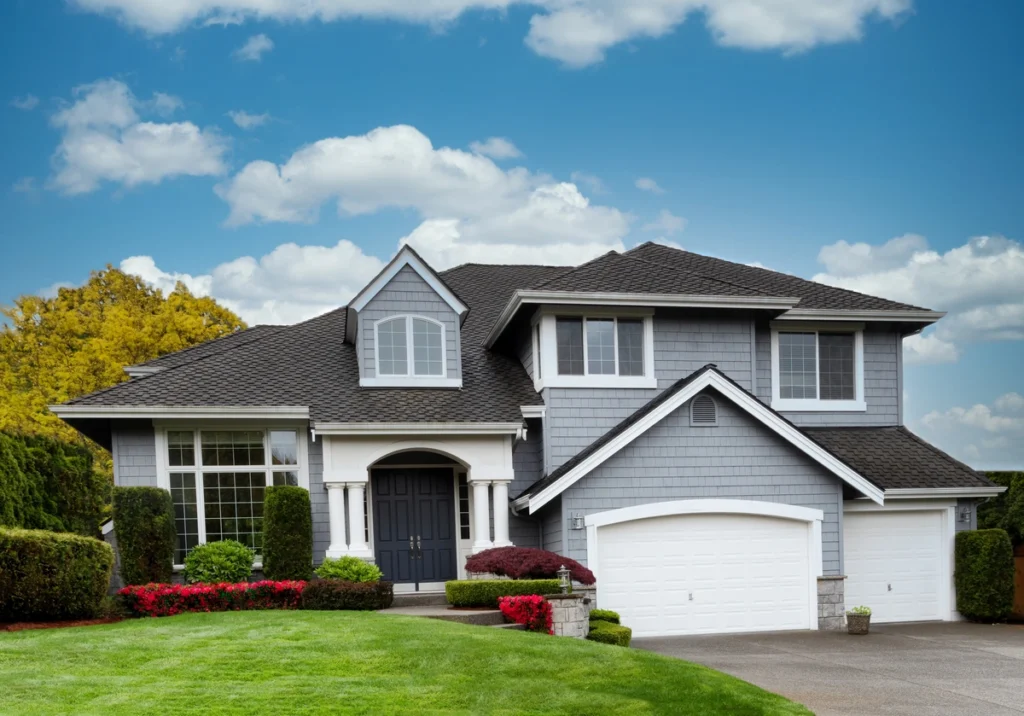
Traditional roofs need crisp workmanship and clean curb appeal.
Watch for: chimney flashing, dormers, ridge ventilation, valleys, and straight shingle lines.
These homes often have living space tucked under the roofline.
Watch for: dormers, sidewalls, roof-to-wall intersections, ventilation, and heat/moisture control.
Long roof planes make drainage and edge detail easy to spot.
Watch for: attic airflow, clean roof edges, broad gutter runs, and dependable drainage.
The biggest risks usually happen where roof sections come together.
Watch for: step flashing, roof-wall connections, valleys, gutters, and downspouts that move water away fast.
Older multi-unit roofs should be treated as full systems, not isolated leak repairs.
Watch for: vent pipes, chimneys, skylights, low-slope areas, and aging roof decking.
Shared rooflines need consistency as much as they need performance.
Watch for: HOA requirements, material matching, drainage patterns, and a uniform exterior look.
Roof replacement in Clark should begin with a complete inventory of every roof plane and addition. A postwar home may have a simple front elevation but contain dormers, a garage, a rear family room, or a second-floor expansion with different decking, pitch, and ventilation. The estimate should explain how those sections will be integrated.
Tear-off can reveal plank boards, patched sheathing, multiple layers, old flashing, blocked soffit intake, or additions that were never connected correctly. A strong proposal identifies deck replacement pricing, flashing methods, ventilation changes, material options, and how hidden conditions will be documented.
Project planning should account for driveways, neighboring homes, mature landscaping, patios, pools, and any soft or saturated ground after storms. Material delivery, debris containment, ladder placement, daily cleanup, and emergency weather protection should be established before tear-off.
Blue Nail can help compare GAF architectural shingles, metal roofing, composite slate and shakes, and appropriate low-slope systems. The best choice depends on pitch, architecture, structural condition, maintenance expectations, drainage, tree exposure, and any association requirements.
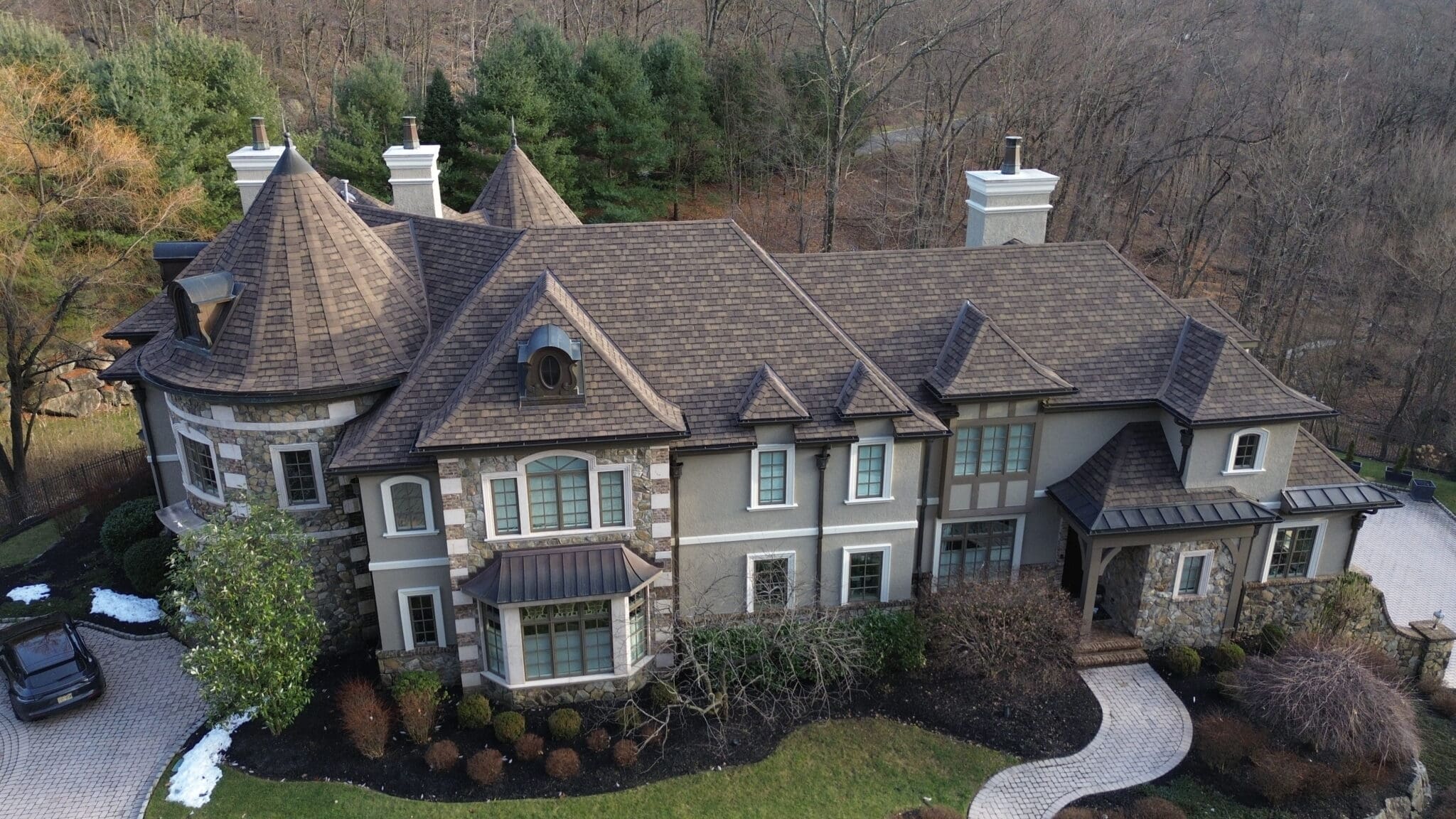
Roof repair in Clark often begins with a missing shingle, pipe boot, chimney leak, dormer sidewall, skylight, or water where an addition meets the original home. The inspection should trace the entire water path because the interior stain may be below a different roof section than the actual opening.
Trees can create branch impacts and fill valleys or gutters. Overflow may damage fascia or send water onto a lower roof, while shade can keep some surfaces damp longer. A successful repair addresses the failed detail and the drainage or maintenance condition around it.
Split-levels and expanded homes need careful diagnosis because separate attic zones can develop different ventilation and condensation conditions. Water entering at an upper roof-wall transition may travel behind siding and appear in a lower room.
Repair is practical when the problem is isolated and surrounding materials remain sound. Replacement becomes more likely when leaks recur, shingles are broadly worn, multiple old sections are failing, or the deck, ventilation, and low-slope transitions need widespread correction.
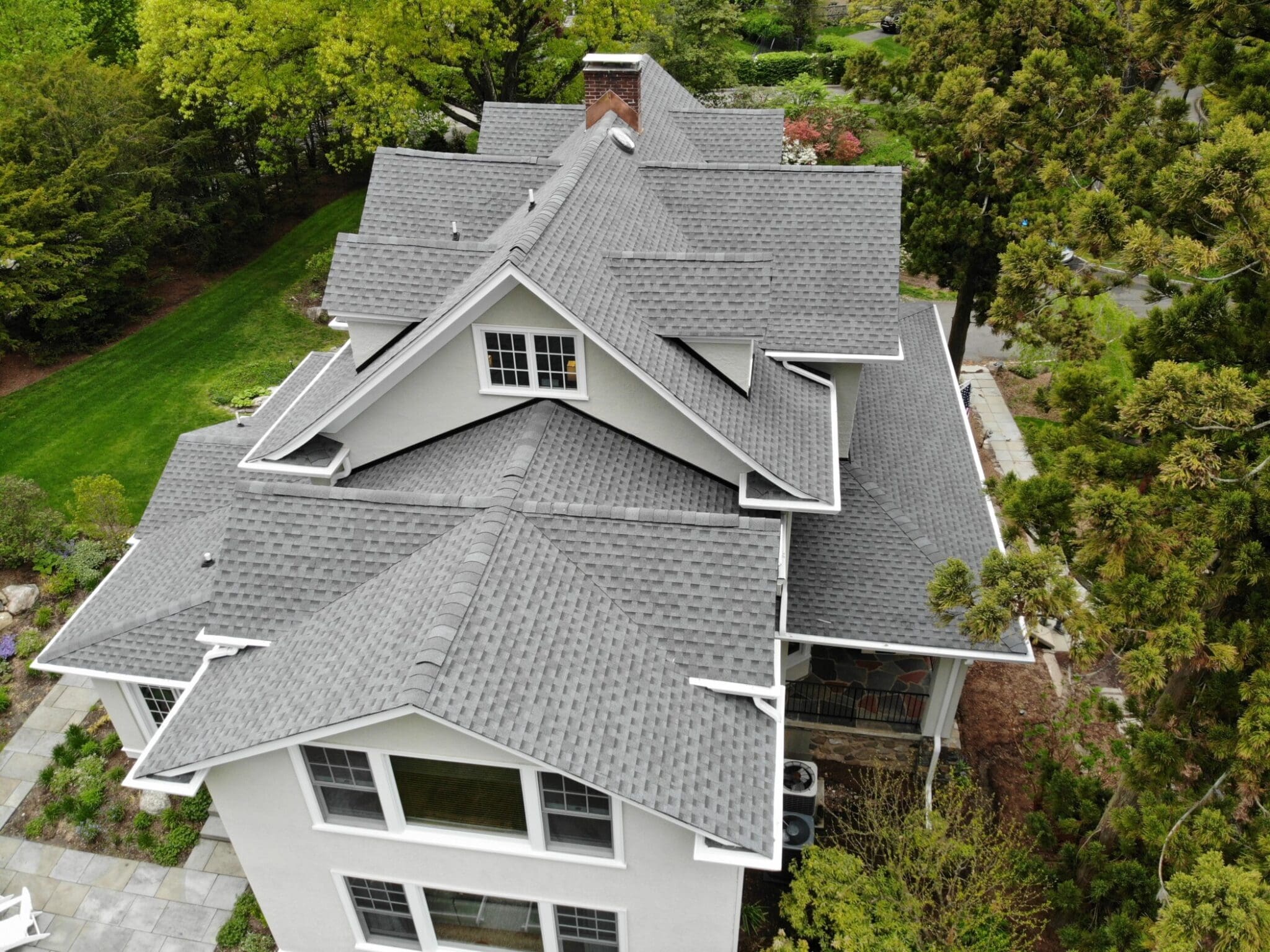
Whether your New Jersey home is your place to share meals with your family, cheer on your favorite team, or catch up with your friends, our local team is committed to making your home everything you’ve ever dreamed of.
Proximity to water does not automatically create a roofing problem, but nearby trees, storm debris, moisture, and ground conditions can affect maintenance and safe access.
Keep roof drainage clear, inspect after severe weather, and address property flooding or downspout discharge separately from the roof assembly.
Additions create transitions between old and new framing, different pitches, roof-wall connections, short valleys, and separate drainage paths. Flashing may have been reused or covered during earlier work.
A repair should evaluate the full tie-in, not only the visible seam. Chronic low pitch or deteriorated decking may require rebuilding a larger section.
Signs of a problem can include excessive heat, winter condensation, frost, staining, mold-like growth, or uneven snow melt. These symptoms should be evaluated with insulation and air sealing, not ventilation alone.
Each attic zone needs balanced intake and exhaust. Adding more ridge vent without adequate soffit intake may not improve performance.
Cost depends on size, pitch, height, access, material, layers, deck condition, chimneys, dormers, skylights, low-slope sections, ventilation, gutters, and property protection.
A heavily expanded split-level or two-story home will generally require more labor than a simple ranch with a straightforward roof plane.
Repair may be enough for an isolated pipe boot, flashing failure, limited wind damage, or small low-slope problem when surrounding materials are healthy.
Replacement becomes more likely when leaks recur, shingles are brittle, multiple additions are failing, or deck and ventilation problems affect broad areas.
Requirements depend on the work scope, decking or structural changes, and related exterior work. Townhome and condominium communities may also require association approval.
Confirm current requirements with the Township and any applicable association before ordering materials. The proposal should identify permit and inspection responsibility.





Had our windows replaced by Blue Nail and they did an incredible job! EJ, Dom, Miguel, and the rest of the team were incredibly efficient while still being meticulous with every detail. They cleaned up every last piece of debris before they left, and the entire project went so much faster than I anticipated. Highly recommend!

Blue Nail Exteriors was outstanding to work with for installation of our new roof and gutters! They were timely and very friendly throughout the entire process. We love how our new roof and gutters look! I highly recommend reaching out to them and I’ve already told anyone I’ve ran into how great they are! My wife and I know in the future we will be contacting them again for windows and siding at some point!

Very Flexible and move fast once they are allowed to work. Painting took longer than expected (weather) and they were patient and professional. The price for our service was almost a $700 dollars less than another popular gutter only business.

Excellent. The team worked hard, got the job done in 2 days and was very professional in all aspects. The team coordinator (Kevin) was outstanding and incredibly knowledgeable.

Blue Nail is responsive, professional and a pleasure to deal with.

High recommendations 100%! This team was available, on time, cared, and helped prioritize our roofing before my birth. The crew were all hard working and no time wasted. Our roof looks beautiful on our first home. So very please and thankful this company came to our recommendation. You won't be disappointed!

Called about water pooling at the corner of our house near the gutter. Dan came by within 30 minutes to check it out. Turned out the gutters were just clogged. He went ahead and checked all the gutters around the house while he was here and got it sorted. Friendly, responsive, and genuinely helpful. Thank you so much! Blue Nail goes above and beyond for their customers.

They were fantastic! Managed to squeeze in a roof replacement job before our due date (birth) despite that I gave a very short notice, and they did a great job, cleaned up well, and to a good price! It was great! Thank you! My highest recommendations.

Blue Nail resided our home using Hardie material. Their price was competitive, and the quality of work was a 6 out of 5 stars! John Hogan and his team are easy to work with as was the excellent crew doing the work on our house. They were meticulous! I would recommend Blue Nail without hesitation or reservation!