2 minute read
After the Nor’easter: The Roof Problems Homeowners Notice Too Late
Understanding Post-Nor'easter Roof Issues Nor'easters bring intense wind and rain that can…
If you need a trusted roofing company in Dunellen, New Jersey, the experienced team at Blue Nail Roofing and Siding can help. We can serve all of your roofing needs, from minor maintenance and repairs to full roof installation and replacement.

Outstanding GAF Golden Pledge Warranty

Flexible Financing

Wide Range of Top-Notch Services

If you live in Dunellen and need help deciding between roof repair and roof replacement, start with a roofing conversation that gives you clear next steps. The recommendation should reflect the age and shape of the roof, the home’s additions, the property’s access, and the way water is moving through the system.
Dunellen grew as a compact railroad community, and many residential blocks around the NJ Transit station, North Avenue, Washington Park, and the streets on both sides of the rail line contain older Foursquares, Colonials, bungalows, Cape Cods, two-family homes, and postwar houses. Newer station-area development adds townhome and multifamily roof systems to that mix.
Compact lots create their own project requirements. Porch roofs, chimneys, narrow driveways, mature trees, neighboring homes, and a history of additions or layered reroofing can affect access and scope. A century-old detached home should not be evaluated the same way as a newer attached property with shared elevations and coordinated drainage.
Dunellen roofs still face hot summers, heavy rain, wind, falling branches, snow, ice, and freeze-thaw movement. Blue Nail helps homeowners evaluate leaks, flashing, roof layers, ventilation, low-slope sections, gutters, and replacement options with the building and surrounding property in mind.
Get Started
Common Dunellen Home Styles
A quick visual guide to show homeowners what matters most based on the style and structure of their home.
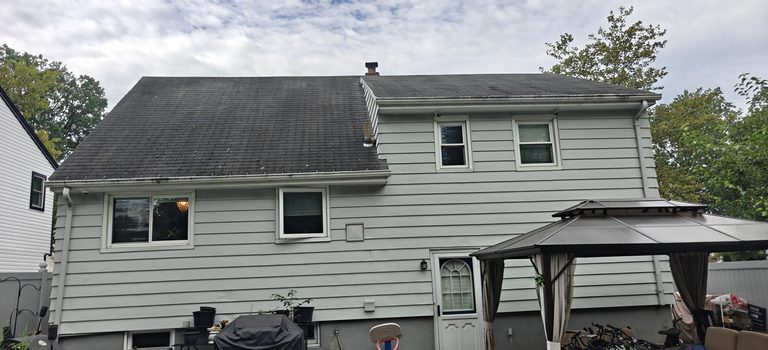
Tall homes often combine simple main roof planes with porches, chimneys, and later additions.
Watch for: porch tie-ins, chimney flashing, older decking, multiple layers, eave ventilation, and narrow access.
Lower rooflines and broad porches make edge drainage and transitions especially visible.
Watch for: porch valleys, low-slope sections, exposed rafter areas, gutter alignment, and ventilation at shallow eaves.
Finished upper rooms and dormers can leave small attic cavities that are difficult to inspect.
Watch for: dormer sidewalls, short valleys, knee-wall ventilation, insulation contact, and aging roof deck.
More occupants and roof penetrations require organized access and a complete view of the roof.
Watch for: vent stacks, chimneys, separate additions, shared drainage, occupied-unit coordination, and prior patchwork.
Postwar homes may have broad low slopes or offset roofs with more than one attic section.
Watch for: long eaves, roof-wall intersections, uneven ventilation, downspout discharge, and rear additions.
Attached and modern buildings may have several roof heights, shared walls, and association requirements.
Watch for: responsibility boundaries, shared flashing, concentrated runoff, access rules, and approved material specifications.
Roof replacement in Dunellen should begin with an assessment of the roof’s full history. On older homes, the scope may include several layers, repaired decking, older chimneys, porch roofs, and additions installed at different times. Tear-off is an opportunity to correct those details instead of covering them again.
The ventilation plan should fit the home. A Foursquare may have a more open attic, while a Cape Cod can have short knee-wall spaces and finished ceilings close to the roof deck. Porch roofs and low-slope additions may require a separate material and should be integrated carefully with the main roof.
Tight lots make logistics part of the roofing plan. The contractor should explain staging, driveway and sidewalk protection, debris control, communication with neighbors, and how entrances will remain usable. Around the station area, attached or association-managed properties may also require coordination before work begins.
Depending on the building, Blue Nail can help compare GAF architectural shingles, metal roofing, composite slate and shakes, natural slate, cedar shakes, and appropriate low-slope systems. Material selection should reflect pitch, architecture, drainage, long-term maintenance, and budget.
Explore Roof Replacement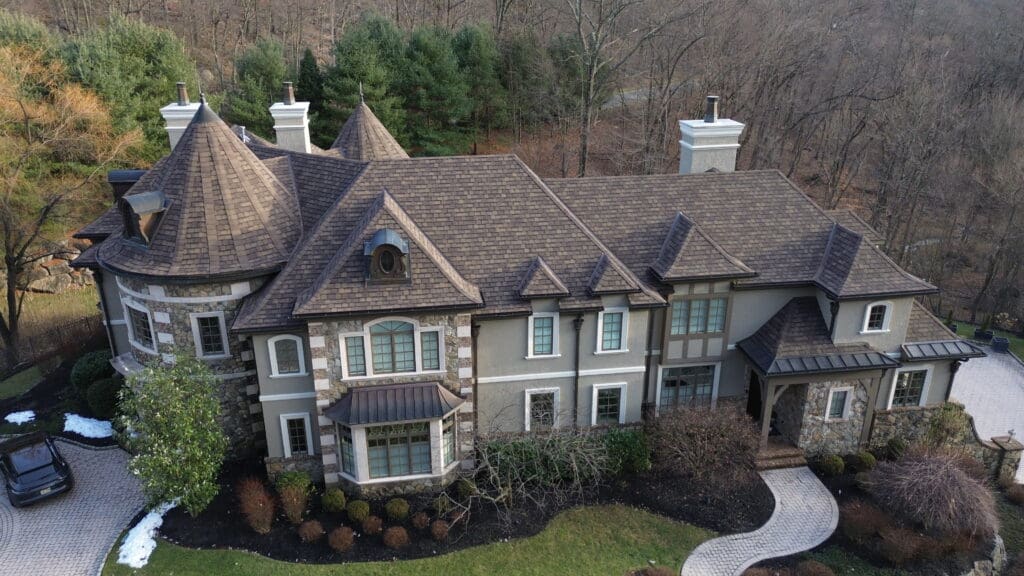
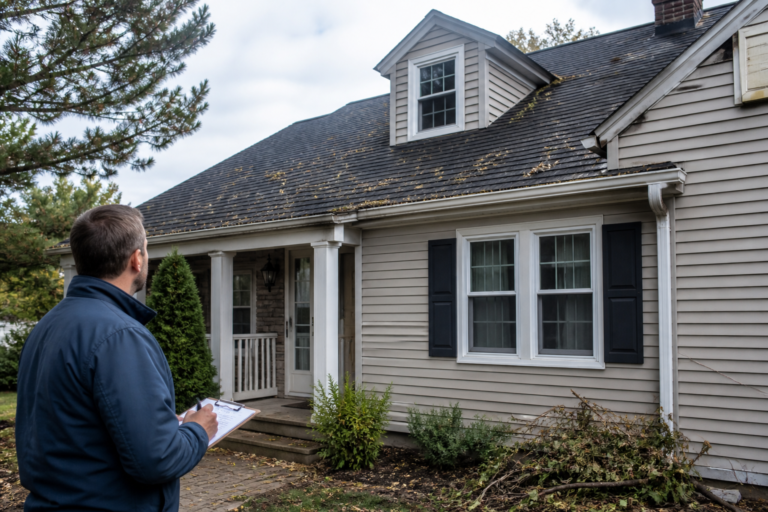
Roof repair in Dunellen often involves chimney flashing, porch-roof transitions, valleys, pipe boots, missing shingles, or water entering where a rear addition meets the original home. Older materials can remain serviceable, but repairs need to tie into them without creating another weak point.
Tree debris and compact drainage paths can worsen leaks. A clogged gutter may send water behind fascia or onto a lower roof, while a short downspout can discharge beside the foundation. The roof, gutters, and runoff path should be considered together even though they are separate building systems.
Low-slope porch and addition roofs need methods suited to their pitch. Repeated coating over an unresolved seam, wall transition, or ponding area may provide only temporary relief. The inspection should determine whether the membrane, substrate, edge, and drainage can support a lasting repair.
On attached or multifamily properties, the source may cross a shared elevation or appear in a different unit from the point of entry. A good repair traces the water path and defines the responsibility boundary before work is proposed.
See Roof Repair Services
Whether your New Jersey home is your place to share meals with your family, cheer on your favorite team, or catch up with your friends, our local team is committed to making your home everything you’ve ever dreamed of.
Removing old roofing may reveal multiple layers, cracked or patched boards, deteriorated sheathing, obsolete flashing, or porch and addition transitions that were covered by earlier work. Chimney mortar and edge details may also need attention.
A contractor should explain which conditions are visible before work, which can only be confirmed after tear-off, and how any additional work will be documented and priced.
The plan should identify where materials and a debris container can be placed, how crews will protect neighboring property, and how driveways, sidewalks, porches, landscaping, and entrances will remain safe.
Smaller staging areas do not prevent quality work, but they require disciplined delivery timing, debris control, and daily cleanup.
Often it can, provided the failed area is limited and the surrounding membrane and substrate are still sound. Common repair locations include wall flashing, seams, edges, drains, and transitions to the main roof.
If the surface has widespread cracking, chronic ponding, saturated insulation, or repeated patches, replacement of that roof section may be more reliable than another localized repair.
Cost depends on roof size, pitch, access, number of layers, deck condition, chimneys, porch roofs, flashing, ventilation, and the material selected. Tight staging or several separate roof sections can also affect labor and protection needs.
A clear estimate should describe the known scope and explain how concealed decking or framing conditions will be handled if they are found.
Yes. Wind-driven rain may expose a roof or flashing defect at the same time that clogged gutters, short downspouts, or overwhelmed surface drainage create water near the building. Those problems can occur together without having the same cause.
A roof inspection can address roofing, flashing, and gutter conditions. Street, river, yard, or foundation drainage concerns may require separate evaluation by the appropriate professional or municipality.
Requirements depend on the scope and current local rules. Structural deck repairs, framing changes, skylights, or work involving other building systems may be handled differently from a straightforward reroof.
Confirm the current process with the Dunellen Construction Office before work begins and identify whether the contractor or property owner will be responsible for applications and inspections.