2 minute read
After the Nor’easter: The Roof Problems Homeowners Notice Too Late
Understanding Post-Nor'easter Roof Issues Nor'easters bring intense wind and rain that can…
If you need a trusted roofing company in Edison, New Jersey, the experienced team at Blue Nail Roofing and Siding can help. We can serve all of your roofing needs, from minor maintenance and repairs to full roof installation and replacement.

Outstanding GAF Golden Pledge Warranty

Flexible Financing

Wide Range of Top-Notch Services

Edison is too large and architecturally varied for a generic roofing recommendation. The right scope should account for the specific neighborhood, home size, roof complexity, age, additions, attic layout, tree exposure, access, drainage, and any existing solar or mechanical equipment.
North Edison includes many larger Colonials, split-levels, contemporary homes, and wooded properties. South Edison, Clara Barton, Menlo Park, Bonhamtown, and neighborhoods near Oak Tree Road include older Cape Cods, ranches, bungalows, postwar homes, expanded houses, infill construction, and townhome communities. The roof details can change substantially from one part of the township to another.
A large Colonial may have several valleys, dormers, chimneys, and garage tie-ins. A compact Cape Cod can place finished rooms close to the deck. Expanded homes may combine old and new framing, while contemporary roofs can include complex geometry or low-slope sections. Busy streets, mature landscaping, and limited driveway space also affect staging and protection.
Summer heat, heavy rain, wind, snow, ice, falling branches, and freeze-thaw movement all test roofs across Edison. Blue Nail helps homeowners evaluate storm damage, leaks, flashing, ventilation, gutters, solar coordination, low-slope areas, and full replacement with the entire home in mind.
Get Started
Common Edison Home Styles
A quick visual guide to show homeowners what matters most based on the style and structure of their home.
Multiple gables, garages, dormers, and chimneys create a roof system with many transitions.
Watch for: valleys, chimney flashing, roof-wall details, ventilation balance, gutter junctions, and steep access.
Several elevations and attic sections can complicate airflow, drainage, and leak tracing.
Watch for: step flashing, upper-to-lower runoff, separate ventilation zones, short slopes, and additions.
Broad roof areas can appear simple while placing significant demand on edges and gutters.
Watch for: lower pitches, long gutter runs, deck condition, bath vents, edge wear, and solar penetrations.
Compact older homes may combine dormers, porches, chimneys, and limited attic access.
Watch for: dormer sidewalls, porch tie-ins, knee-wall airflow, older decking, and insulation contact.
Major additions and second-story work can connect several construction eras in one roof.
Watch for: old-to-new transitions, framing changes, material compatibility, ventilation continuity, and concentrated drainage.
Modern roof shapes and attached communities may include low slopes, shared elevations, or association standards.
Watch for: membrane areas, parapets, shared flashing, HOA requirements, internal drainage, and access planning.
Roof replacement in Edison begins with accurately measuring the size and complexity of the complete system. A large Colonial with multiple gables and valleys can require very different labor, flashing, ventilation, and protection from a simple ranch or compact Cape Cod.
Older and expanded homes deserve a close look at decking, roof layers, attic zones, and transitions between original and newer construction. The replacement plan should explain how chimneys, skylights, walls, low-slope sections, gutters, and ventilation will be rebuilt as a coordinated system.
Logistics should be addressed before the project begins. Busy roads, narrow driveways, mature trees, extensive landscaping, pools, and neighboring properties can influence delivery, material staging, debris control, and daily cleanup. Existing solar panels require separate coordination for safe removal and reinstallation.
Depending on the home, Blue Nail can help compare GAF architectural shingles, metal roofing, composite slate and shakes, natural slate, cedar shakes, and low-slope systems. Material selection should reflect pitch, architecture, complexity, maintenance goals, warranty requirements, and budget.
Explore Roof Replacement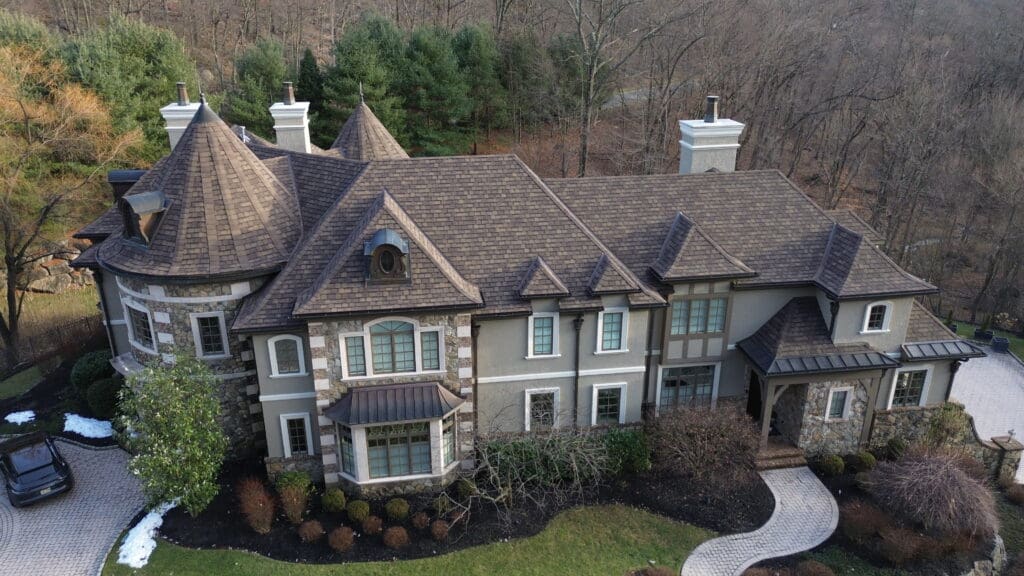
Roof repair in Edison often begins after heavy rain, wind, or branch impact, but many leaks come from gradual failure at chimneys, valleys, dormers, pipe boots, skylights, and roof-to-wall intersections. Complex homes can allow water to travel a considerable distance before it appears indoors.
Large roof systems deserve a broad inspection. A stain below one valley may be related to an upper dormer or wall transition, and a lower roof may be receiving concentrated runoff from several upper slopes. Repairing only the visible shingle damage can miss the detail that caused the leak.
Older additions and low-slope sections frequently require different materials from the main roof. Repeated sealant or coating may not solve open seams, poor wall flashing, ponding, or a failing transition between systems. The repair method should suit the pitch and substrate.
The best recommendation weighs the repair area against the age and condition of the surrounding roof. A focused repair may extend a healthy system, while widespread wear, repeated leaks, or several aging roof sections may make replacement more economical.
See Roof Repair Services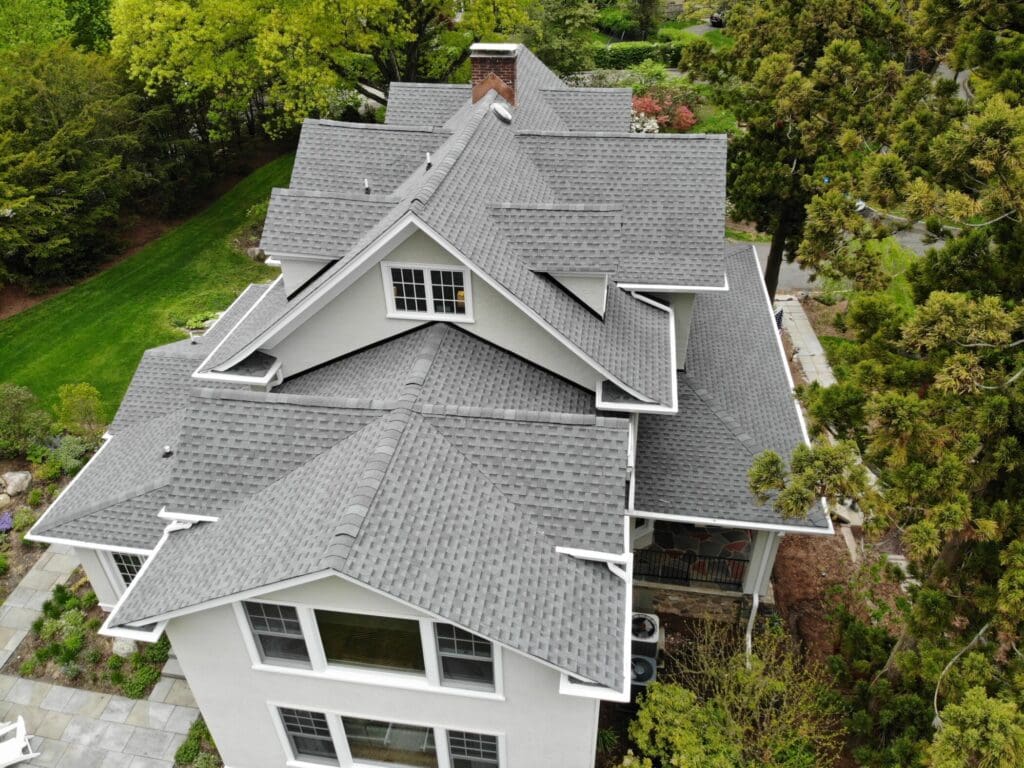
Whether your New Jersey home is your place to share meals with your family, cheer on your favorite team, or catch up with your friends, our local team is committed to making your home everything you’ve ever dreamed of.
The same performance principles apply, but the housing mix and property conditions can differ. Larger North Edison homes may have complex rooflines, steep slopes, mature trees, and several attic zones. South Edison and Clara Barton include many older, compact, postwar, and expanded homes.
The inspection should respond to the actual structure rather than relying on the neighborhood label. Roof pitch, layers, deck, additions, ventilation, drainage, and access determine the scope.
Sometimes. A clearly separated porch, addition, garage, or low-slope section may be replaced independently when transitions can be rebuilt correctly and the adjacent roof remains serviceable.
Partial replacement is less attractive when valleys, ridge lines, warranties, color matching, or water paths cross the proposed boundary. The contractor should explain the performance and appearance tradeoffs.
Cost depends on roof area, pitch, height, number of layers, deck condition, material, access, valleys, chimneys, dormers, skylights, ventilation, solar equipment, and protection needs. Complex geometry can add substantial labor even when two homes have similar living area.
A useful proposal should describe the included details and the process for documenting and approving concealed work found after tear-off.
Each attic zone and roof section should be identified. Additions, cathedral ceilings, finished upper floors, and separated garages may not share one continuous airflow path, so a single ridge vent does not automatically serve the whole home.
Intake, exhaust, insulation, baffles, and any powered equipment should be evaluated together so one ventilation method does not short-circuit another.
From the ground, look for missing shingles, displaced metal, fallen branches, gutter damage, or interior water. Avoid climbing onto a wet or damaged roof. Use temporary interior protection if needed and arrange a professional inspection.
Document visible damage and keep repair records. An inspection should distinguish storm-created damage from older wear and identify whether temporary protection, repair, or replacement is appropriate.
Consider the roof’s age, condition, deck, material, and expected remaining life before installing panels. A roof likely to need replacement soon may create extra solar removal and reinstallation costs.
Coordinate the roofer and solar provider so attachment locations, flashing, warranties, electrical clearances, and future service responsibilities are understood before work begins.