5 minute read
End Of Summer Siding Check: What To Look For Before Fall Weather Hits
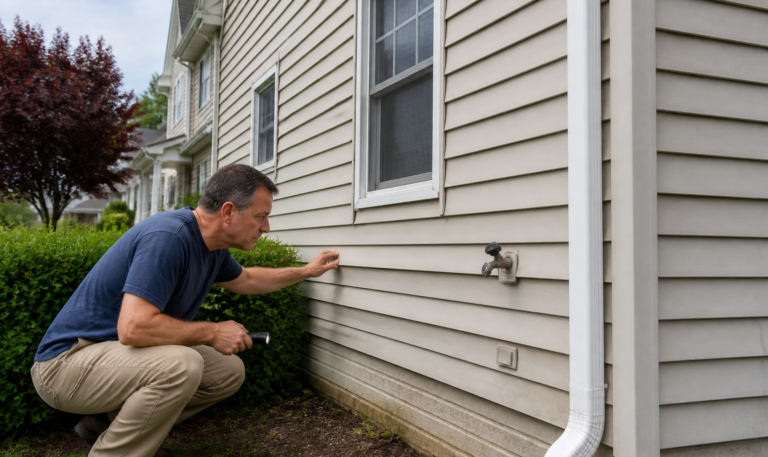
Start With The Obvious Stuff Walk the outside of the house slowly.…
If you need a trusted roofing company in Bloomfield, New Jersey, the experienced team at Blue Nail Roofing and Siding can help. We can serve all of your roofing needs, from minor maintenance and repairs to full roof installation and replacement.

Outstanding GAF Golden Pledge Warranty

Flexible Financing

Wide Range of Top-Notch Services

If you are searching for a roofing contractor in Bloomfield, NJ, the age and style of the home should shape the recommendation. The township includes a substantial mix of prewar housing, postwar neighborhoods, multifamily properties, and newer development, often within a relatively compact area.
Around the Historic Town Green, Broad Street, Bloomfield Center, Brookdale Park, Watsessing Park, and established side streets, homeowners may find Victorian-era details, Colonials, Dutch Colonials, bungalows, Foursquares, Cape Cods, ranches, split-levels, and two-family homes. Some properties retain older roof decking and masonry, while others have additions or roof sections installed at different times.
That history can create hidden conditions. A roof may have more than one layer, patched plank decking, outdated flashing around a chimney, limited attic intake, or a low-slope rear addition that was never integrated correctly with the main roof. Dense lots and mature trees can also affect access, cleanup, gutter performance, and how quickly shaded areas dry.
Blue Nail helps Bloomfield homeowners evaluate leaks, storm damage, roof age, decking, flashing, ventilation, gutters, and full replacement so the work fits the house rather than relying on a one-size-fits-all scope.
Get Started
Common Bloomfield Home Styles
A quick visual guide to show homeowners what matters most based on the style and structure of their home.
Traditional roofs need crisp workmanship and clean curb appeal.
Watch for: chimney flashing, dormers, ridge ventilation, valleys, and straight shingle lines.
These homes often have living space tucked under the roofline.
Watch for: dormers, sidewalls, roof-to-wall intersections, ventilation, and heat/moisture control.
Long roof planes make drainage and edge detail easy to spot.
Watch for: attic airflow, clean roof edges, broad gutter runs, and dependable drainage.
The biggest risks usually happen where roof sections come together.
Watch for: step flashing, roof-wall connections, valleys, gutters, and downspouts that move water away fast.
Older multi-unit roofs should be treated as full systems, not isolated leak repairs.
Watch for: vent pipes, chimneys, skylights, low-slope areas, and aging roof decking.
Shared rooflines need consistency as much as they need performance.
Watch for: HOA requirements, material matching, drainage patterns, and a uniform exterior look.
Roof replacement in Bloomfield begins with determining what is beneath the visible shingles. Older homes may have plank decking, multiple layers, patched sections, or framing that was altered during an addition. Those conditions do not automatically create a problem, but they should be anticipated and documented in the proposal.
The replacement scope should explain how chimneys, dormers, walls, pipe penetrations, valleys, and low-slope sections will be handled. It should also evaluate ventilation from the soffit or other intake points through the exhaust system. Installing new shingles without addressing trapped heat and moisture can shorten the life of the new roof.
On compact lots, project management is part of quality. Crews need a plan for material staging, driveway and landscape protection, magnetic cleanup, and keeping walkways or entrances usable. Multifamily properties may also require communication with residents and coordination around shared spaces.
Blue Nail can help compare GAF architectural shingles, metal roofing, composite slate and shakes, natural slate, and cedar shakes. The material should be selected in the context of the home’s pitch, architecture, existing exterior, and maintenance expectations.
Explore Roof Replacement
Roof repair in Bloomfield often starts with a stain near a chimney, dormer, bathroom vent, or rear addition. Other common signs include lifted shingles after wind, granules in gutters, peeling paint near the roof edge, or water appearing after a long period of heavy rain.
Older homes can have several generations of repairs in one small area. Sealant, surface patches, and replacement shingles may hide the original failure without correcting it. A reliable repair should remove enough material to inspect the flashing and deck where the problem is occurring.
Low-slope additions and porch roofs deserve separate attention because they may require a membrane rather than standard shingles. If the pitch is too low, simply extending shingles onto that section can create recurring leaks even when the installation looks uniform from the ground.
When the surrounding roof is sound, a focused repair can be cost-effective. When shingles are broadly worn, deck problems appear in several areas, or multiple flashing details are failing, replacement may reduce the cycle of repeat service calls.
See Roof Repair Services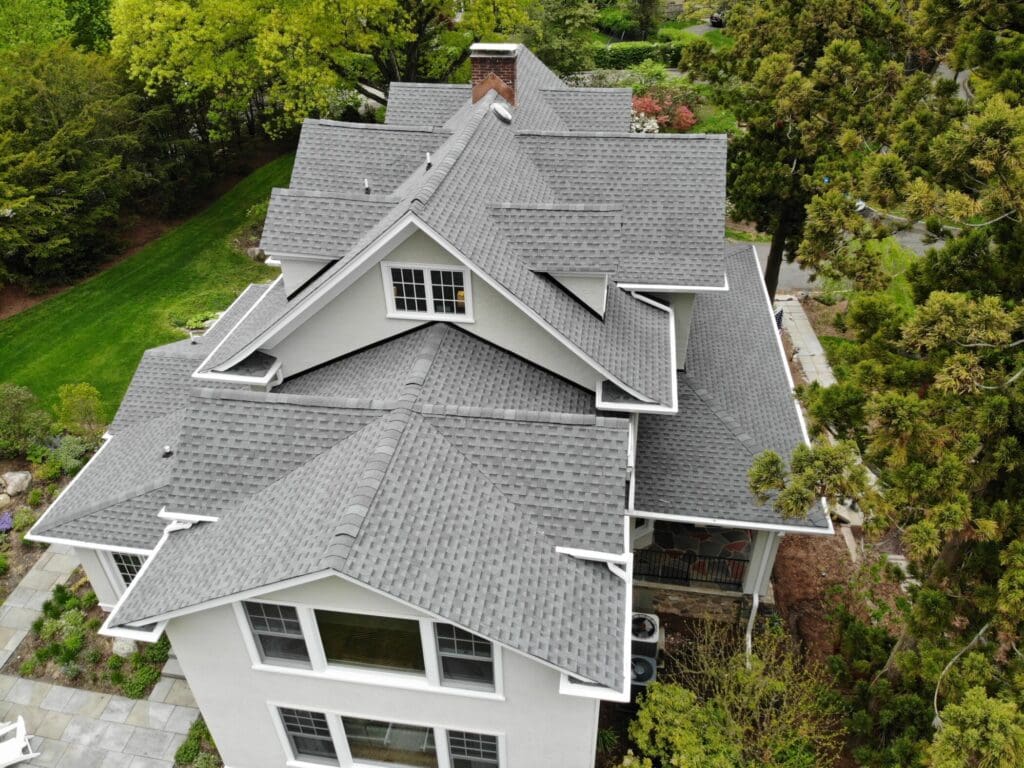
Whether your New Jersey home is your place to share meals with your family, cheer on your favorite team, or catch up with your friends, our local team is committed to making your home everything you’ve ever dreamed of.
Common conditions include multiple roof layers, aging plank or plywood decking, deteriorated chimney flashing, limited intake ventilation, low-slope additions, and repairs made with different materials over time.
An inspection should determine which conditions are active problems and which are simply features of an older house that can be managed during repair or replacement.
Repair is usually most practical when the leak or damage is isolated and the remaining roof is still in good condition. Replacement becomes more attractive when wear is widespread, leaks recur, several sections have different ages, or hidden deck and ventilation issues are likely to require extensive work.
The contractor should explain the expected service life of each option rather than recommending replacement based on age alone.
Cost depends on size, pitch, height, access, number of layers, deck condition, material, chimneys, dormers, low-slope sections, flashing, and ventilation. Compact lots and multifamily coordination may also affect project logistics.
A detailed estimate should explain tear-off, disposal, deck replacement pricing, flashing methods, ventilation components, and warranty coverage.
Not every older home requires a specialty material, but architecture should influence the selection. Shingle profile, color, exposure, edge details, and treatment of visible metal can help a new roof look appropriate to the house.
For a locally designated property or district, homeowners should confirm whether any review applies before making a highly visible material change.
Yes. Excess attic heat and moisture can contribute to condensation, mold, ice dams, deck deterioration, and premature shingle aging. Ventilation should be evaluated before the new roof is installed, not treated as an afterthought.
Cape Cods, finished attics, and homes with additions may require extra investigation because the airflow path is not always open from eave to ridge.
Not automatically. Gutters that are properly sized, securely attached, correctly pitched, and in good condition may remain. Damaged, undersized, or poorly draining gutters should be addressed because they are part of the roof’s water-management system.
The evaluation should include fascia, drip edge, gutter pitch, downspout locations, and where water is discharged around the property.