5 minute read
End Of Summer Siding Check: What To Look For Before Fall Weather Hits
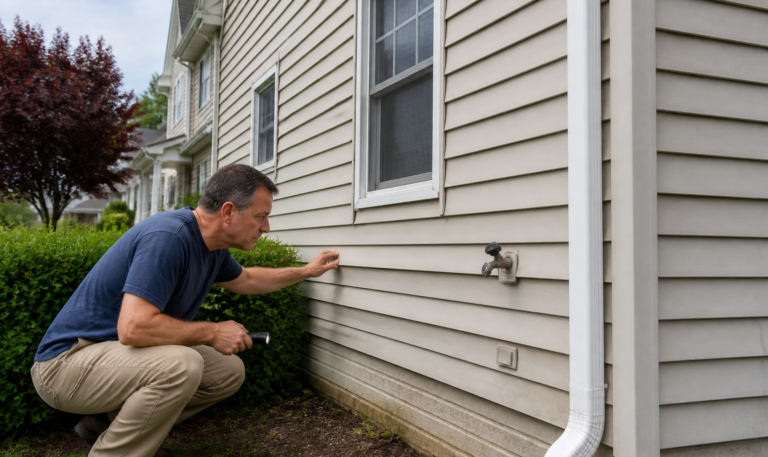
Start With The Obvious Stuff Walk the outside of the house slowly.…
If you need a trusted roofing company in Nutley, New Jersey, the experienced team at Blue Nail Roofing and Siding can help. We can serve all of your roofing needs, from minor maintenance and repairs to full roof installation and replacement.

Outstanding GAF Golden Pledge Warranty

Flexible Financing

Wide Range of Top-Notch Services

If you need a roofing contractor in Nutley, NJ, choose a company that understands the township's tree-lined neighborhoods, older homes, postwar housing, compact lots, and the drainage demands created by mature landscaping.
Nutley includes residential areas around Franklin Avenue, the Enclosure Historic District, Yanticaw Park, Kingsland Park, Memorial Park, and the Third River corridor. Homes range from Colonials, Cape Cods, Tudors, bungalows, and Foursquares to ranches, split-levels, two-family homes, and updated properties with rear additions or expanded upper floors.
Tree cover is one of the most important local roofing factors. Leaves and small branches can collect in valleys and gutters, shaded roof sections may dry slowly, and downspout outlets near park-like or sloped lots need to move water away effectively. Older homes may also have plank decking, multiple roof layers, masonry chimneys, and ventilation layouts that predate current roofing practices.
Blue Nail helps Nutley homeowners evaluate repair, replacement, storm damage, roof age, flashing, ventilation, gutters, and materials so the recommendation reflects both the house and the property around it.
Get Started
Common Nutley Home Styles
Nutley's mix of traditional, postwar, and multifamily housing creates different roof intersections, ventilation needs, and drainage priorities.
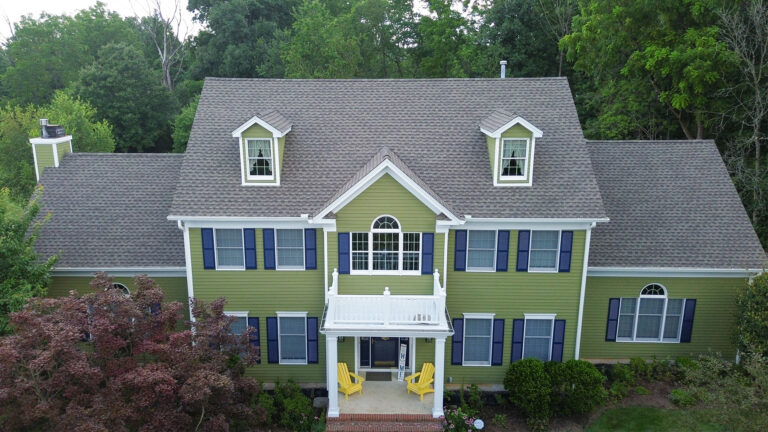
Traditional roof forms make straight lines, chimney details, and curb appeal easy to see.
Watch for: chimney flashing, dormers, ridge ventilation, entry roofs, valleys, and gutter alignment.
Dormered upper floors often have limited attic space and several short roof intersections.
Watch for: dormer cheeks, sidewall flashing, knee-wall airflow, ice-prone eaves, and low rear additions.
Steep gables and masonry details concentrate water at valleys and wall intersections.
Watch for: step flashing, chimney saddles, narrow valleys, slate-like materials, and runoff onto lower roof sections.
Broad eaves and porches rely on sound fascia, soffit airflow, and continuous drainage.
Watch for: porch transitions, hip and ridge caps, intake ventilation, long gutters, and older roof decking.
Postwar layouts may combine broad roof planes with attached garages and additions.
Watch for: roof-to-wall connections, lower-slope sections, broad drainage areas, separate attic zones, and long downspout runs.
Multiple units can mean more roof penetrations and a greater need for coordinated access.
Watch for: vent stacks, chimneys, shared drainage, low-slope sections, previous patching, and occupant communication.
Roof replacement in Nutley should begin with a full evaluation of the shingles or specialty material, underlayment, deck, flashing, ventilation, roof edges, and gutters. On older homes, the deck may be plank construction or may show evidence of previous layers and repairs. Those conditions should be identified and addressed before the new roof is covered.
Dormers, chimneys, porches, and additions deserve careful detailing. A low-slope rear roof may need a membrane rather than shingles, and a dormer should have properly integrated step flashing rather than exposed sealant. The proposal should clearly describe these transitions so the homeowner can compare more than brand and color.
Tree-lined lots also affect the replacement plan. Crews should protect plantings, keep drainage outlets clear, and complete a thorough cleanup. The finished system should include gutters and downspouts capable of handling concentrated water and realistic leaf maintenance.
Blue Nail can help compare GAF architectural shingles, metal roofing, composite slate and shakes, natural slate, and cedar shakes. The best material should fit the roof pitch, home style, maintenance expectations, and budget.
Explore Roof Replacement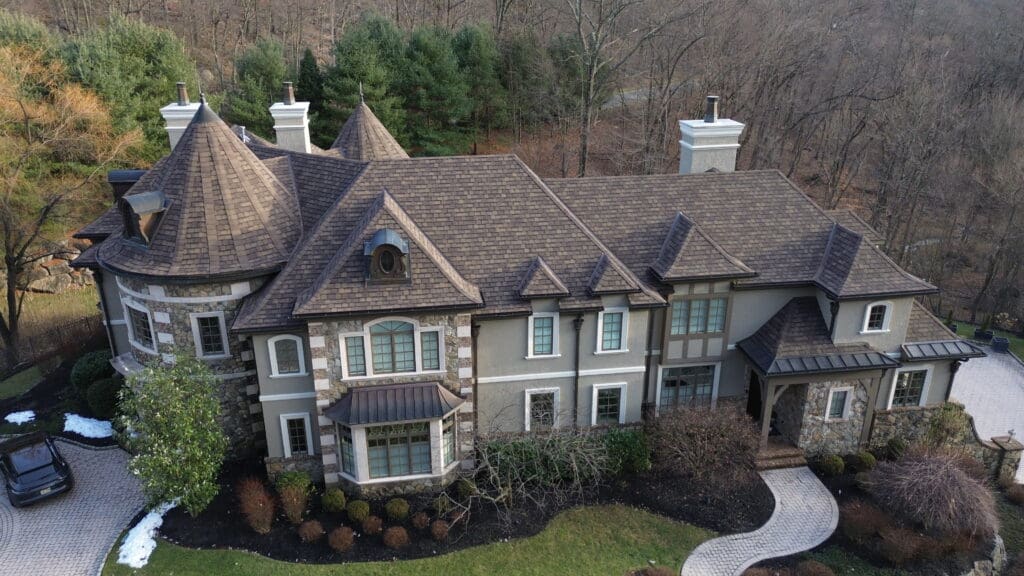
Roof repair in Nutley often begins with leaks near chimneys, dormers, pipe boots, valleys, or low-slope additions. Wind can loosen shingles, while branches and leaf debris can damage roofing surfaces or keep water from draining freely.
Moss or staining on a shaded roof does not always mean replacement is necessary. It does mean the surface, ventilation, drainage, and surrounding tree conditions should be evaluated. Aggressive pressure washing can damage shingles and should not be used as a substitute for proper diagnosis.
Gutter overflow is another common source of confusion. Water behind fascia or along an exterior wall may be caused by a clogged or poorly pitched gutter rather than a failure in the main roof covering. The inspection should follow the entire water path from the roof surface to the downspout outlet.
A focused repair can be a good investment when the rest of the roof remains flexible, secure, and properly draining. When multiple areas are failing or the roof has widespread wear, replacement may provide more predictable protection.
See Roof Repair Services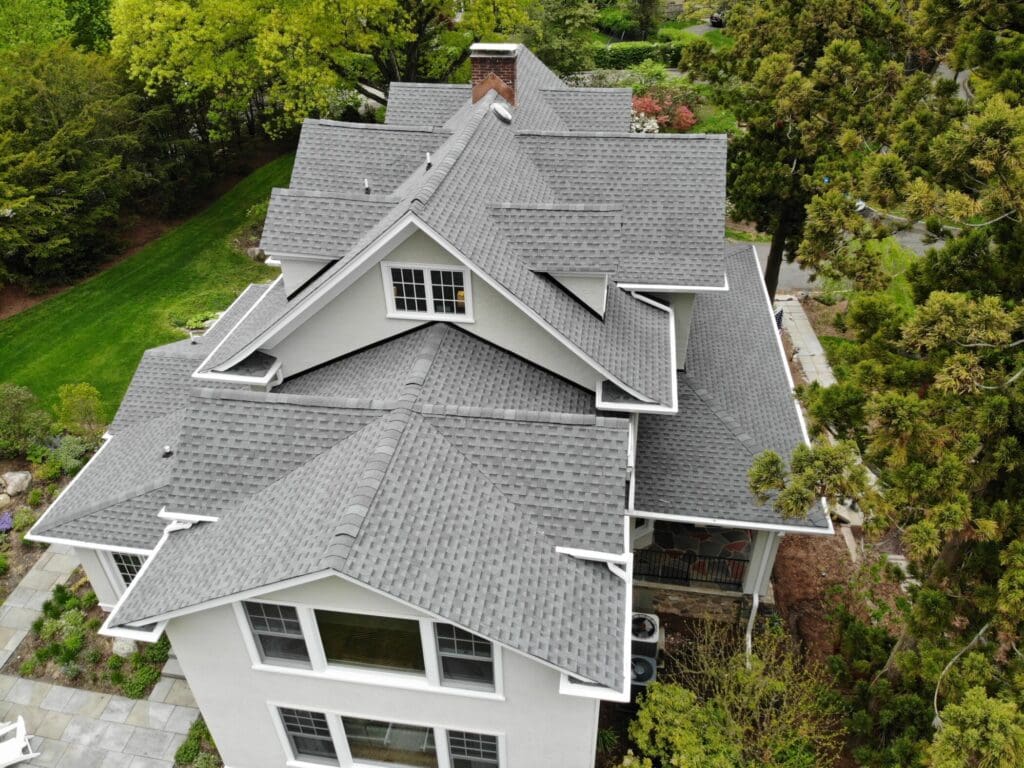
Whether your New Jersey home is your place to share meals with your family, cheer on your favorite team, or catch up with your friends, our local team is committed to making your home everything you’ve ever dreamed of.
Trees can contribute to damage when branches strike or scrape the roof, leaves block valleys and gutters, or dense shade keeps surfaces wet. Healthy trees with reasonable clearance are not automatically a problem.
Regular maintenance should focus on hazardous branches, debris accumulation, drainage, and signs that a shaded section is deteriorating faster than the rest of the roof.
Repair may be appropriate for limited wind damage, a failed pipe boot, a localized flashing leak, or a small low-slope defect when the surrounding roof remains sound. Replacement is more likely when leaks recur, shingles are broadly worn, deck problems are present, or several repairs would be needed at once.
The recommendation should include the age and expected remaining life of the full roof.
Cost depends on roof area, pitch, height, access, material, existing layers, deck condition, chimneys, dormers, additions, ventilation, gutters, and property protection. Compact lots and multifamily properties can require additional staging and coordination.
A detailed proposal should show what is included and how hidden deck replacement will be priced.
Older homes may have plank decking, plywood overlays, several generations of flashing, patched openings, or more than one roofing layer. Some of these conditions can remain; others need repair to meet material and installation requirements.
The contractor should document what is visible before work and explain how unexpected conditions will be handled after tear-off.
Balanced ventilation helps manage heat and moisture, protecting the deck and reducing the risk of condensation, mold, ice dams, and premature shingle aging. The system typically needs both intake and exhaust.
Cape Cods, finished attics, and expanded homes may need a more detailed plan because airflow paths are often blocked or divided.
Yes. Gutters, downspouts, fascia, and roof edges work together. A new roof cannot prevent water problems if gutters overflow or downspouts empty next to the foundation.
The evaluation should consider gutter capacity, pitch, leaf accumulation, outlet locations, and how water moves across the property.