
 973-937-8876
Why skylight leaks get misdiagnosed
Most people focus on the wet spot instead of the pattern behind it. Water can travel along roof decking, framing, or drywall before it becomes visible, so the stain you see may not be directly below the failure point.
That is why quick patchwork often fails. Caulk may hide the symptom for a short time, but it does not solve damaged flashing, worn shingles, poor ventilation, or an aging skylight assembly.
Signs the problem may be coming from the roof
If the leak appears during or right after steady rain, the surrounding roof system deserves a close look. Missing shingles, cracked roofing materials, exposed fasteners, and ice-and-water protection issues can all let water move toward the skylight opening.
This is especially common on older roofs where the skylight itself may still be serviceable, but the roofing around it has reached the end of its life. If the ceiling stain grows after storms but not during dry humid weather, roof-related intrusion moves higher on the list.
Signs the flashing may be the real culprit
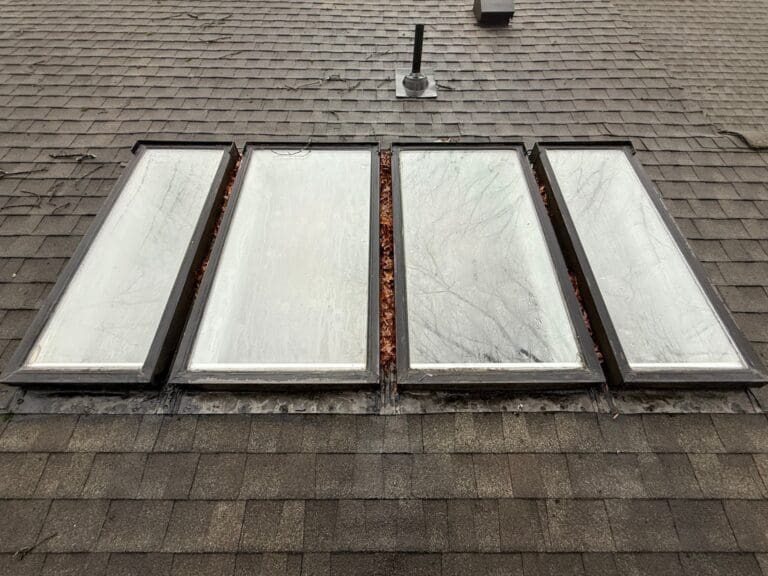
Flashing is the transition system that seals the skylight to the roof. When step flashing, apron flashing, or curb flashing is installed poorly, rusted, bent, or disturbed during a past repair, water can slip in at the edges even when the skylight glass is fine.
A flashing issue often shows up as intermittent leaking during wind-driven rain. You may notice damp drywall at the sides of the skylight well, bubbling paint, or water appearing after storms from a particular direction.
When it is condensation instead of a true leak
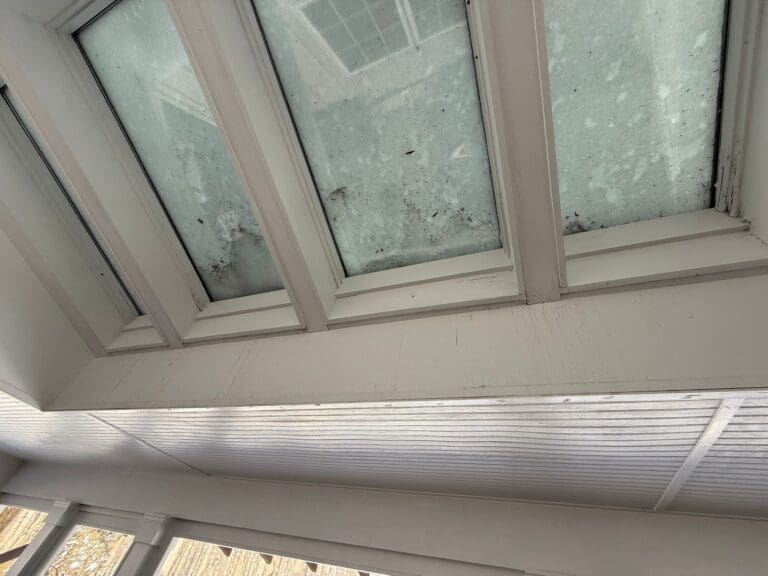
Not every drip means rain is getting in. Condensation forms when warm indoor air meets a colder skylight surface, which is common during winter and during seasonal temperature swings in New Jersey homes.
Bathrooms, kitchens, upper-story rooms, and homes with weak attic ventilation are frequent trouble spots. If moisture appears in the morning, during cold snaps, or when indoor humidity is high, condensation becomes a serious possibility.
A few clues point in that direction:
• Water beads directly on the glass or frame • The issue happens without rainfall • Moisture is worse after showers, cooking, or humid days • The drywall damage is light but recurring
What to check after heavy rain
Start with timing. Note whether the moisture showed up during rain, several hours later, or on a dry day. That single detail helps narrow the cause faster than most homeowners realize.
Then look for visible warning signs around the opening: staining at corners, soft drywall, peeling paint, musty odor, or trim separation. If it is safe to observe from outside, check whether shingles above the skylight look worn or displaced and whether debris is trapping water uphill of the unit.
Do not rely on tar or surface caulk as a diagnosis tool. Temporary sealing can redirect water and make the real issue harder to find later.
Why waiting usually makes the repair more expensive
Skylight leaks rarely stay small. Even minor intrusion can damage insulation, stain finished ceilings, soften roof decking, and create conditions for hidden wood rot around the opening.
Condensation problems carry their own costs too. If the root issue is poor ventilation or excess humidity, the moisture can keep returning and slowly wear down paint, drywall, and interior finishes.
When repair makes sense and when replacement should be considered
If the skylight is relatively modern and the problem is isolated to surrounding flashing or roofing materials, a targeted repair may be enough. If the unit is older, drafty, fogged between panes, or tied to broader roof aging, a full replacement assessment is often the smarter move.
The goal is not to force a bigger project. It is to avoid paying twice by repairing around a skylight that is already near the end of its service life.
Need help with roofing, storm damage, or exterior repairs in Northern New Jersey? Talk with Blue Nail Exteriors.