
 973-937-8876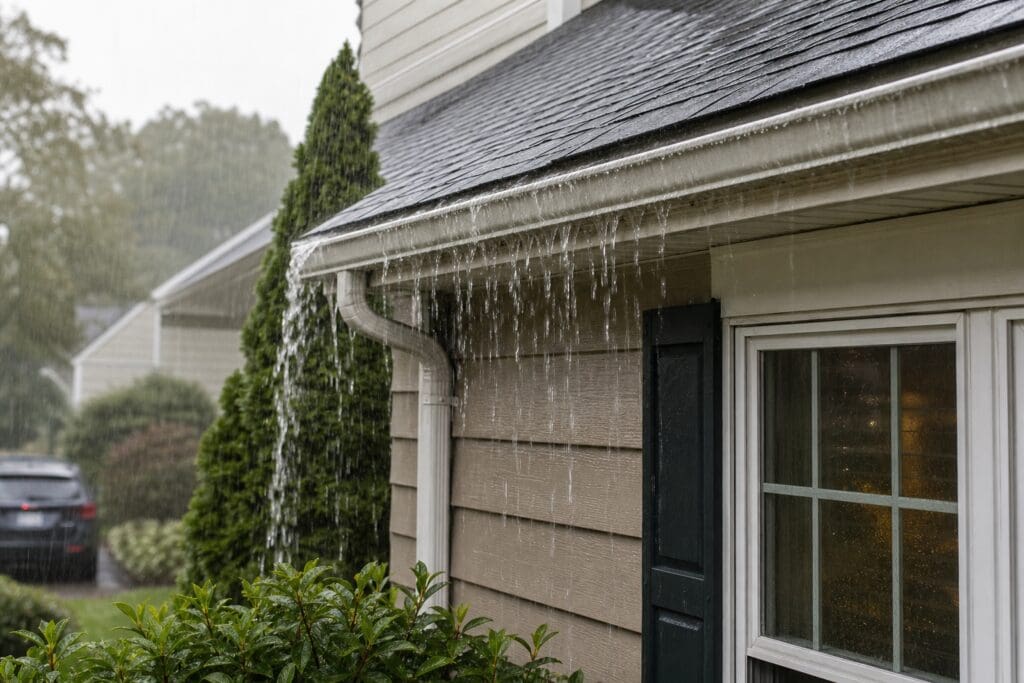
Heavy rain exposes gutter systems that were barely adequate to begin with
A lot of older homes in Northern New Jersey have gutter systems sized for a different weather pattern. When hard summer storms or long soaking rains hit, those gutters can look clogged even when they are technically clean.
That matters because overflow does not just make a mess. It can soak fascia boards, streak siding, wash out planting beds, and dump water too close to the foundation.
Why homeowners often misread the warning signs
Most people assume overflow means one thing: the gutters need cleaning. Sometimes that is true. But if the system overflows during every serious downpour, especially near valleys, inside corners, or long roof runs, the issue may be capacity rather than debris.
That distinction is important. Repeated cleanings will not solve a gutter system that is too narrow, pitched poorly, or fed by downspouts that cannot move water fast enough.
Clues your gutters may be too small for today's rainfall
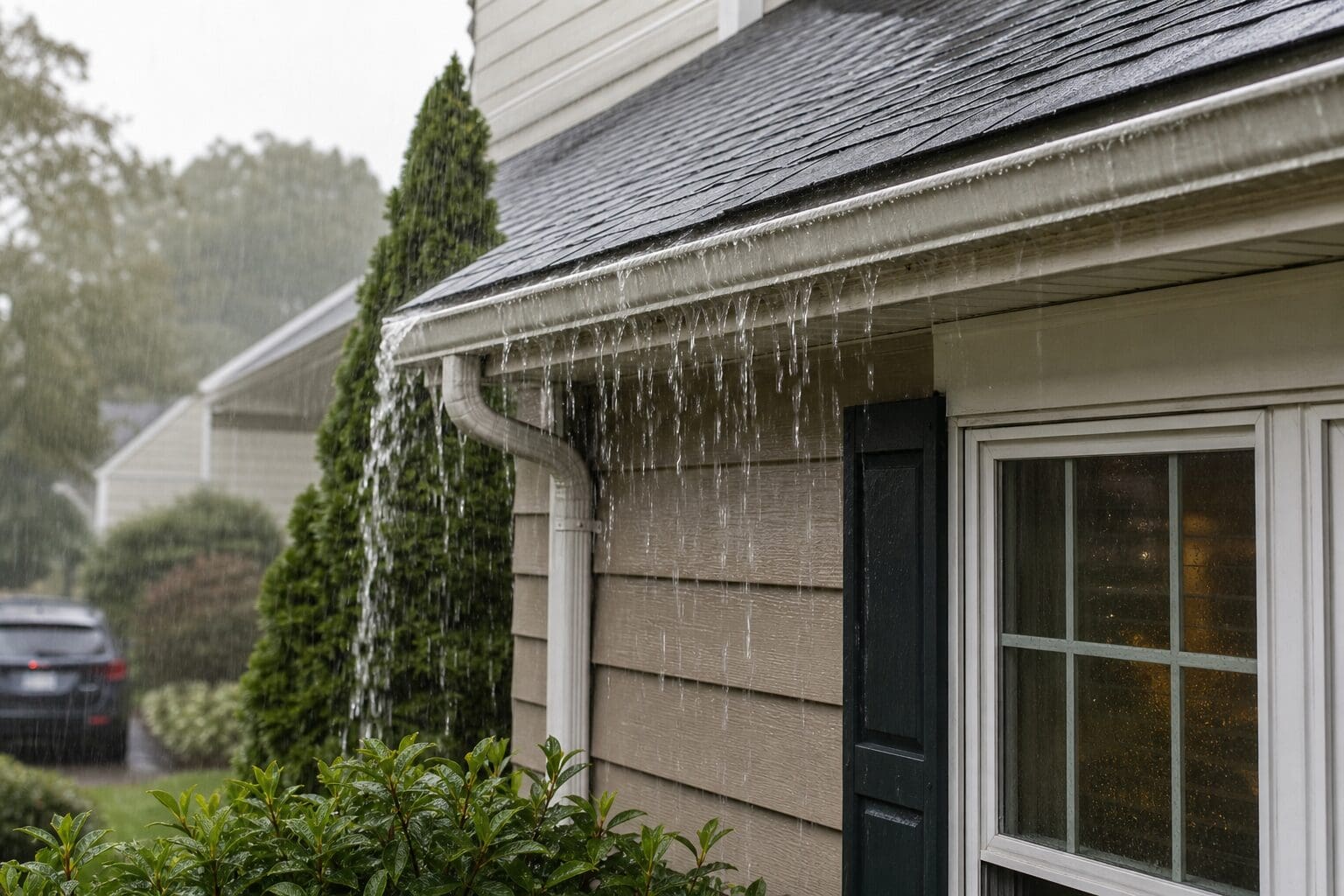
Look at what happens during the storm, not just after it. If water pours over the front edge in sheets, shoots past the corners, or spills behind the gutter onto the fascia, that usually points to a flow problem.
Other clues show up after the rain stops. Peeling paint on fascia, dark staining on siding, erosion below downspouts, damp basement edges, and mulch trenches along the foundation all suggest the drainage system is getting overwhelmed.
You should also pay attention to the roof layout. Homes with steep pitches, large asphalt roof sections, dormers, and valley-heavy designs can collect and dump far more water than a basic gutter setup was built to handle.
What a proper inspection should actually check
A useful gutter inspection goes beyond checking for leaves. It should look at gutter width, downspout count, downspout placement, pitch, fastening points, seam condition, and where water exits once it reaches grade.
On many North Jersey homes, the weak point is not the gutter alone. It is the combination of undersized gutters, too few downspouts, and poor discharge locations that send water right back toward the house.
If overflow is concentrated in one area, the cause may be local. If it happens across multiple elevations during every heavy storm, the whole system may need to be rethought.
When repair makes sense and when replacement is the smarter move
Repairs make sense when the basic system is adequate and the problems are isolated. A pitch correction, a new downspout, a resecured section, or targeted sealing can solve a lot if the gutter size is otherwise appropriate.
Replacement becomes the better investment when you are dealing with chronic overflow, recurring fascia damage, repeated cleanings that do not fix the issue, or a gutter profile that simply cannot keep up with the roof area above it. At that point, spending more money on temporary fixes is usually the expensive path.
For many homeowners, moving to a larger gutter profile and improving downspout layout is less about upgrades and more about preventing avoidable water damage.
Why this matters for fascia, siding, and foundations
Gutters are not just a roof accessory. They are part of the drainage system that protects several expensive parts of the house at once.
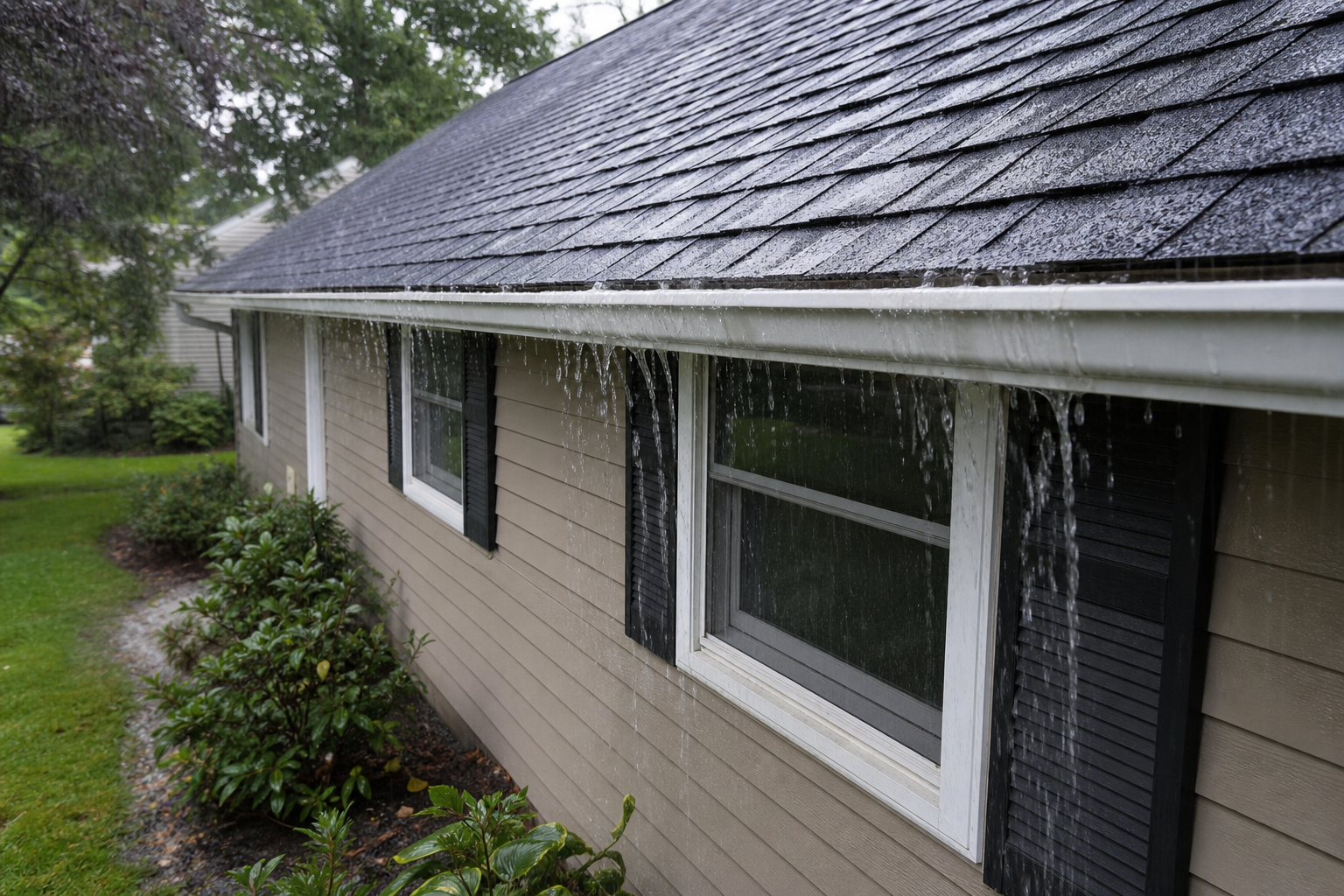
When runoff spills over the gutter edge or backs up behind it, the first visible damage may be cosmetic. The bigger risk is what follows: rotted wood, stained siding, loosened soffits, soil movement, and water collecting where it should not.
That is why heavy rain gutter overflow should not be treated like a minor nuisance. It is often an early warning that the home's drainage path is failing under real-world conditions.
A practical next step for Northern New Jersey homeowners
If your gutters overflow during strong rain even after cleaning, do not keep guessing. Have the system evaluated for capacity, pitch, and drainage design so you can tell the difference between a maintenance issue and a replacement issue.
In Northern New Jersey, heavier seasonal downpours put more stress on older gutter systems than many homeowners realize. Catching an undersized setup early is a lot cheaper than repairing fascia, siding, or foundation damage later.
Need help with roofing, storm damage, or exterior repairs in Northern New Jersey? Talk with Blue Nail Exteriors.